
Which Alicante district should you live in?
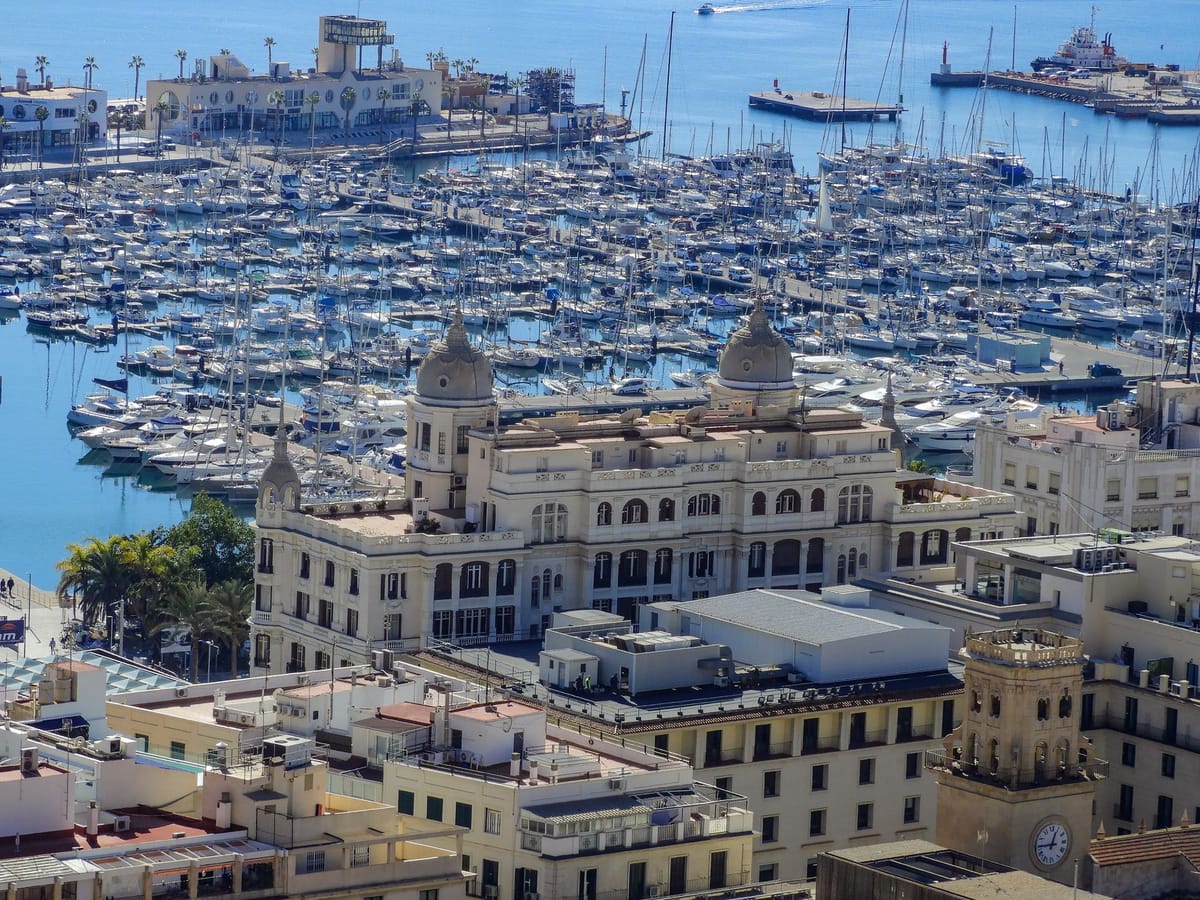
In Alicante, you do not need to change city to change worlds: a ten-minute drive is enough for the price per square metre to nearly double. Budget around 3,694 euros/sqm near Playa de San Juan and El Cabo, against 2,044 euros/sqm in the working-class Carolinas district, barely further from the centre (idealista, June 2026 data). In other words, within a single dense city, you are choosing less an address than a lifestyle and a budget. Here are the neighbourhoods worth considering, from the historic old quarter perched below the castle to the most exclusive villas on the seafront.
A starting benchmark: the average price in Alicante city sits around 2,575 euros/sqm (idealista, June 2026 data, published 13 July 2026), still below the Spanish national average of 2,823 euros/sqm. In other words, Alicante remains more affordable than the country average, but the gap between its own districts is enormous.
| District | Average price | Profile |
|---|---|---|
| Playa de San Juan / El Cabo | 3,694 euros/sqm | Seaside, the most expensive |
| Centro | 3,594 euros/sqm | Urban heart, shops and businesses |
| Parque Avenidas / Vistahermosa | 2,521 euros/sqm | Upmarket residential |
| Campoamor / Carolinas / Altozano | 2,044 euros/sqm | Central, working-class, changing fast |
| Los Angeles / Tombola / San Nicolas | 1,790 euros/sqm | Working-class, tight budgets |
| Virgen del Remedio / Juan XXIII | 1,388 euros/sqm | Cheapest in the city |
| Alicante city average | 2,575 euros/sqm | Comparison benchmark |
The prices above are district averages, not quotes: they move fast and hide large gaps from one street to the next. Always check the real state of the market before signing anything.
The Casco Antiguo (Santa Cruz), the hillside village of "El Barrio"
This is Alicante's historic heart, clinging to the hillside below Castillo de Santa Barbara (free access to the castle). Whitewashed houses, narrow stepped lanes, flowerpots on every corner: the Santa Cruz district, which locals simply call "El Barrio", feels like an Andalusian village dropped into the city. Bohemian and villagey by day, buzzing by night with its tapas bars and cocktail terraces. It is a tiny, intense district: barely 2,716 residents (Ayuntamiento de Alicante, 2023). People come here for the charm and street life, accepting the constraints of old housing stock (steep gradients, small floor areas, little parking). One price caveat: we found no recent, reliable price-per-square-metre data specific to Santa Cruz, so be wary of ranges quoted by some agencies, as they are neither dated nor independent.
Centro and Ensanche-Diputacion, the walkable city
The Centro is Alicante's urban and commercial heart, regularly praised for its perceived safety and neighbourhood life: everything is within walking distance, from shops to terraces. It is logically one of the priciest parts of the city, at 3,594 euros/sqm (idealista, June 2026 data), just behind the northern seafront. Adjoining the centre, Ensanche-Diputacion is the district of big-name stores (El Corte Ingles, avenue Maisonnave) and sits minutes from Plaza de los Luceros, close to the beach and the port. It is very well served by the TRAM tram network, which makes it a practical base if you want to live without a car. The good compromise for anyone who wants urban buzz and transport links without climbing the lanes of the old quarter.
Playa de San Juan and El Cabo, year-round seaside living
In the north-east of the city, Playa de San Juan and the El Cabo area form the quintessential beach district: the beach on foot, schools, the TRAM and buses reaching the centre in around twenty minutes, and El Campello five minutes away. Avenida de Oviedo is regularly cited as one of the best residential stretches on the seafront. It is also the most expensive district in Alicante, at 3,694 euros/sqm (idealista, June 2026 data). The choice of those who want to live by the water year-round and are willing to pay for it.
Cabo de las Huertas, the most exclusive district
Right next door, Cabo de las Huertas pushes the upmarket dial even further: modern villas and luxury flats with sea views, coves and small natural beaches, a calm, very private residential atmosphere. This is the most exclusive part of the city, reserved for comfortable budgets seeking peace and nature just minutes from the centre. It is the perfect counterpoint to El Barrio: same city, different planet.
Carolinas, the fast-changing social counterpoint
About ten minutes from the centre, Carolinas (Altas and Bajas) is the great social counterpoint on this map. A historically working-class, multicultural central-west district built around its municipal market, it still shows one of the gentlest prices among central areas, at 2,044 euros/sqm for the combined Campoamor-Carolinas-Altozano zone (idealista, June 2026 data). But the district is changing fast: local media have documented genuine gentrification since the 2008 crisis, with shop closures around Plaza de les Palmeretes, rising prices and tension over evictions (El Espanol, 13 May 2023). If you are eyeing Carolinas, you gain neighbourhood life and a contained budget, but check street by street, since the dynamics vary a great deal.
Vistahermosa and Albufereta, upmarket residential living
Vistahermosa (the Parque Avenidas-Vistahermosa area) is one of Alicante's most sought-after residential enclaves: wide avenues, a calm atmosphere, at the foot of the Sierra Grossa and about five minutes from the centre. Budget 2,521 euros/sqm for this area (idealista, June 2026 data), a notch below Centro and the seafront, for a more open setting. Closer to the sea, Albufereta is presented as a prestigious zone near the beach: we found no sufficiently detailed independent profile to say more, but it plays in the same upmarket residential league as the northern seafront.
Torn between Alicante and Valencia? Read Alicante or Valencia: where to live, town by town.
Before you decide, think about the rest of your move: compare rental prices in our guide to renting a flat on the Costa Blanca, look at how to get around the Costa Blanca (the TRAM changes everything in Alicante), and work through the checklist for moving to the Costa Blanca in your first 90 days.
Frequently asked questions about Alicante's districts
Which is the most expensive district in Alicante?
Playa de San Juan and El Cabo, at an average of 3,694 euros/sqm, ahead of Centro (3,594 euros/sqm), according to idealista (June 2026 data). Neighbouring Cabo de las Huertas is the city's most exclusive area.
Which is the cheapest district to settle in Alicante?
The Virgen del Remedio-Juan XXIII area, at 1,388 euros/sqm, is the cheapest in the city (idealista, June 2026 data). Among central areas, Carolinas remains one of the more affordable at 2,044 euros/sqm, though the district is changing fast.
Can you live in Alicante without a car?
Yes, especially in Centro, Ensanche-Diputacion and along the northern seafront, all well served by the TRAM and buses. Playa de San Juan is linked to the centre in around twenty minutes.
Is the Casco Antiguo a good district to live in?
For charm and street life, yes: whitewashed houses, a village atmosphere, tapas in the evening. But it is a tiny district (2,716 residents in 2023), with old housing stock as a constraint, and no recent, reliable price-per-square-metre data.
Sources: idealista, average prices per square metre by district (June 2026 data, published 13 July 2026); Ayuntamiento de Alicante, population of the Santa Cruz district (2023); El Espanol, investigation into the gentrification of Carolinas (13 May 2023).
Information verified in August 2026. The Daily Costa Blanca is an AI-assisted publication with human review.
Le Livre blanc 2026 de l'expat
NIE, empadronamiento, fiscalité, école, logement : tout l'essentiel pour s'installer, réuni dans un guide PDF. Laisse ton e-mail, on te l'envoie.
🎉 Et voilà ! Ton Livre blanc 2026 de l'expat s'ouvre ici :
Ouvrir le Livre blanc 2026Dernière étape pour rejoindre l'aventure : confirme ton inscription dans l'e-mail qu'on vient de t'envoyer.
Réagis à cet article