
Getting around the Costa Blanca: TRAM, bus, train and car
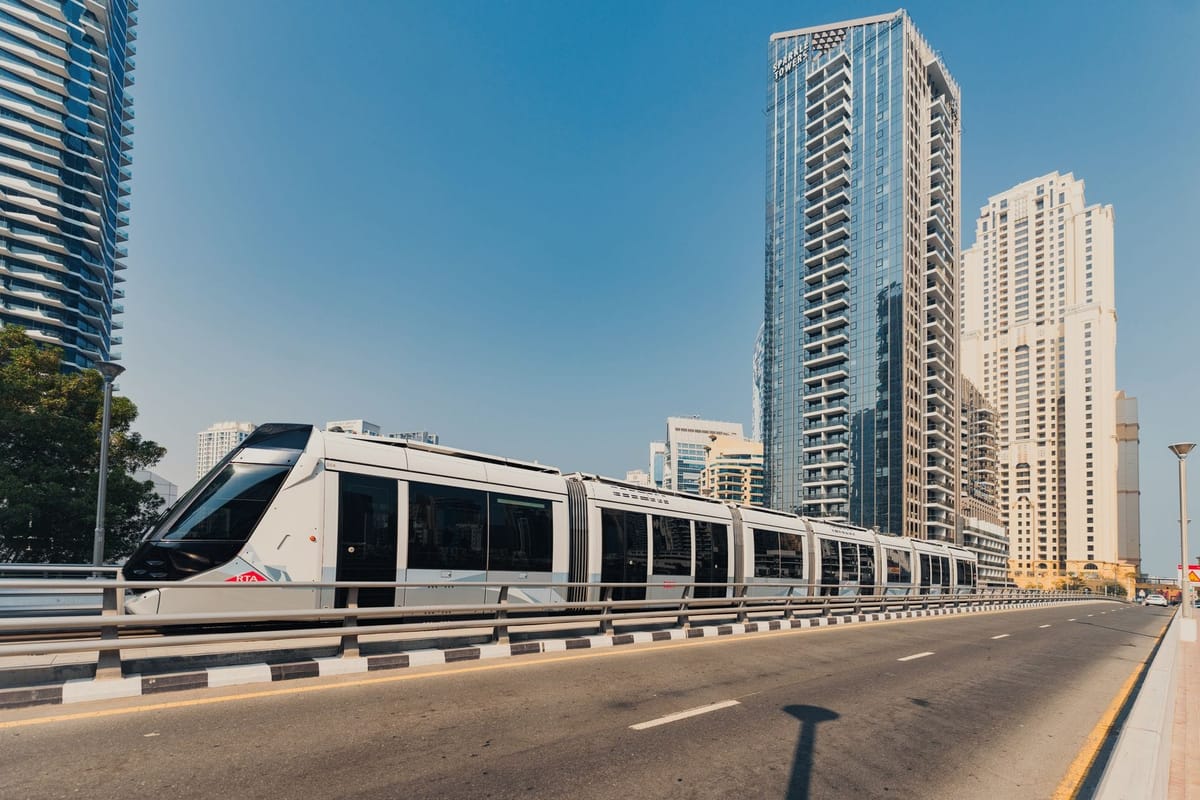
Here, the first question every newcomer asks is not "which line do I take?" but "do I need a car?". The Costa Blanca is not a compact city: it is a coastal strip of towns and villages spread over 200 km. So there is no single network, but several that hand off to one another: the TRAM along the northern coast, the commuter train to the south, and urban buses specific to each town. Here is how to find your feet from day one, and when a car is still the simplest answer.
A coastline, not a city: several networks
Unlike a big city, no single map covers the whole region here. Three systems shape travel, and you need to know which one serves where you live:
- The TRAM d'Alacant (run by FGV): the province's tram-train, 6 lines and around 128 km. This is what links the northern coast, from Alicante to Dénia.
- The TAM (Transporte Alicante Metropolitano): the urban and interurban buses of the Alicante area, fare-integrated with the TRAM.
- The Cercanías (Renfe): the commuter train heading south, from Alicante to Elche, Orihuela and Murcia.
An important point to take on board straight away: each big town has its own bus network. Benidorm, Torrevieja and Dénia have their own urban buses, with their own cards and fares. The "single card" only exists at the scale of the Alicante metropolitan area, not for the whole Costa Blanca.
The TRAM, the coast's backbone
This is the flagship network. Line L1 links central Alicante to Benidorm (about 43 km, a 1h10 journey, every 30 minutes). From Benidorm, line L9 carries on to Dénia along the coast via Altea, Calpe, Benissa and Teulada, 17 stops and around 1h20, one train an hour. Lines L2 to L5 serve the Alicante area (San Vicente, Sant Joan, El Campello, Villajoyosa).
The TRAM works by zones. Reckon the fare by the number of zones crossed:
| TRAM ticket | 1 zone | 2 zones | 3 zones |
|---|---|---|---|
| Single | €1.45 | €2.80 | €3.90 |
| Return | €2.50 | €4.80 | €6.65 |
| Bono 10 (10 trips) | €8.00 | €12.00 |
In practice: an Alicante to Dénia trip is 3 zones, so €3.90 a journey. A Benidorm to Dénia trip, 2 zones, €2.80. The Bono 10 markedly cuts the cost if you often make the same trip.
The card to have in the Alicante area
If you live in Alicante or its ring, the card to get is the Móbilis: contactless, rechargeable, valid for about ten years. It works on the TAM buses and on the TRAM. The most useful tickets:
- Bono Multiviaje (10 trips): €5.25 (€15.75 for 30 trips), plus €2 for the card itself on first purchase.
- 30-day pass (unlimited): €24, plus €4 for the card.
- Bono Jove (young people, 30 trips): around €10.60.
Careful: these are subsidised, and therefore moving, fares. These reduced prices come from State and Generalitat subsidies, extended on the TAM network until 30 June 2026 (tickets bought before the end of 2025 remaining valid until 31 July 2026). The base fare may rise afterwards: always check the current price on the official sites before you top up.
From the airport (Alicante-Elche)
Do not look for a metro or a train under the airport: there is no direct rail link. The public solution is the C-6 bus (Vectalia), which links the airport to central Alicante 24 hours a day, all year, every 15 to 20 minutes (more frequent by day), for €3.85 (cash or contactless). It stops notably at the Renfe station and at Plaza de los Luceros, where you pick up the TRAM. A rechargeable Airport Pass is available from €16 if you make the round trip several times.
To reach the coast directly: ALSA runs a direct bus to Benidorm (about 45 minutes) and Avanza serves Torrevieja. All these buses leave from level 2 (departures) of the terminal.
The commuter train for the south
Southward across the province, the baton passes to the Cercanías, line C-1 Alicante to Murcia, serving Elche (Elx), Crevillent, Albatera, Callosa de Segura, Orihuela and Beniel before Murcia. It is the smart option for living in Elche or Orihuela and working in Alicante.
Good news on budget: on 1 January 2026 Renfe launched new subsidised passes. The personal Abono Único costs €60 (€30 for young people) and gives unlimited use for 30 days. The Bonotren offers 10 trips on a fixed route, and a 40% discount applies from the fifth trip on the single ticket.
The coastal TRAM, almost an excursion
A word for weekends: linking the L1 and then the L9 from Alicante to Dénia is not just a useful journey, it is one of the finest lines on the coast, with views over the Mediterranean between Altea and Calpe. Many ride it on a Sunday as an outing. We make a stop of it in our guide to day trips on the Costa Blanca.
And cycling?
Let us be honest: there is no equivalent of Valencia's Valenbisi here. Alicante had a bike-share scheme, Alabici, but it closed in 2023, short of subscribers and hit by vandalism. In 2026 no public municipal system has replaced it. What remains is private hire and, above all, fine greenways for leisure (such as the Vía Verde del Maigmó) and the seafront, but for your daily journeys, do not count on a shared network.
Do you need a car?
More often than in a compact city, yes. The TRAM covers the northern coast well and the Cercanías the south, but in between, in the sprawling urbanizaciones, the inland villages and the coves off the main routes, a car remains the simplest option day to day. The rule: it depends entirely on where you settle. In the centre of Alicante, Benidorm or Dénia, you can do without. In a hillside estate, far less so. Before signing a lease, look at what runs within walking distance: it is a budget line in its own right, which we put in perspective in our guide to the cost of living on the Costa Blanca.
Official sources
- TRAM d'Alacant (FGV): official fares
- TAM / Vectalia Alicante: passes and fares
- Renfe Cercanías Murcia-Alicante: passes
- Aena: reaching Alicante-Elche airport by bus
- Ministry of Transport: Renfe subsidies 2026
Frequently asked questions
Which transport card should I get on the Costa Blanca?
There is no single card for the whole region. In the Alicante area, the Móbilis card (contactless, rechargeable) works on TAM buses and the TRAM: the TRAM's Bono 10 costs €8 for one zone, and the TAM Bono Multiviaje €5.25 for 10 trips. Benidorm, Torrevieja and Dénia have their own bus networks, with separate cards.
How do I reach Alicante or Benidorm from the airport?
There is no direct train. The C-6 bus links the airport to central Alicante 24 hours a day for €3.85, every 15 to 20 minutes, with a TRAM connection at Luceros. For Benidorm, ALSA runs a direct bus of about 45 minutes; the buses leave from level 2 (departures) of the terminal.
Do you need a car to live on the Costa Blanca?
It depends where you live. In the centre of Alicante, Benidorm or Dénia, public transport is enough. But in the sprawling urbanizaciones, the inland villages or near the coves off the TRAM and train routes, a car often remains essential day to day. Worth assessing before you choose your home.
Information verified in July 2026. Fares and networks change fast: before you travel, always check the official source (links above). The Daily Costa Blanca is an AI-assisted publication with human review. Spotted a mistake? Write to hello@thedailycostablanca.com or visit thedailycostablanca.com.
Le Livre blanc 2026 de l'expat
NIE, empadronamiento, fiscalité, école, logement : tout l'essentiel pour s'installer, réuni dans un guide PDF. Laisse ton e-mail, on te l'envoie.
🎉 Et voilà ! Ton Livre blanc 2026 de l'expat s'ouvre ici :
Ouvrir le Livre blanc 2026Dernière étape pour rejoindre l'aventure : confirme ton inscription dans l'e-mail qu'on vient de t'envoyer.
Réagis à cet article