
The Spanish healthcare system: how it really works
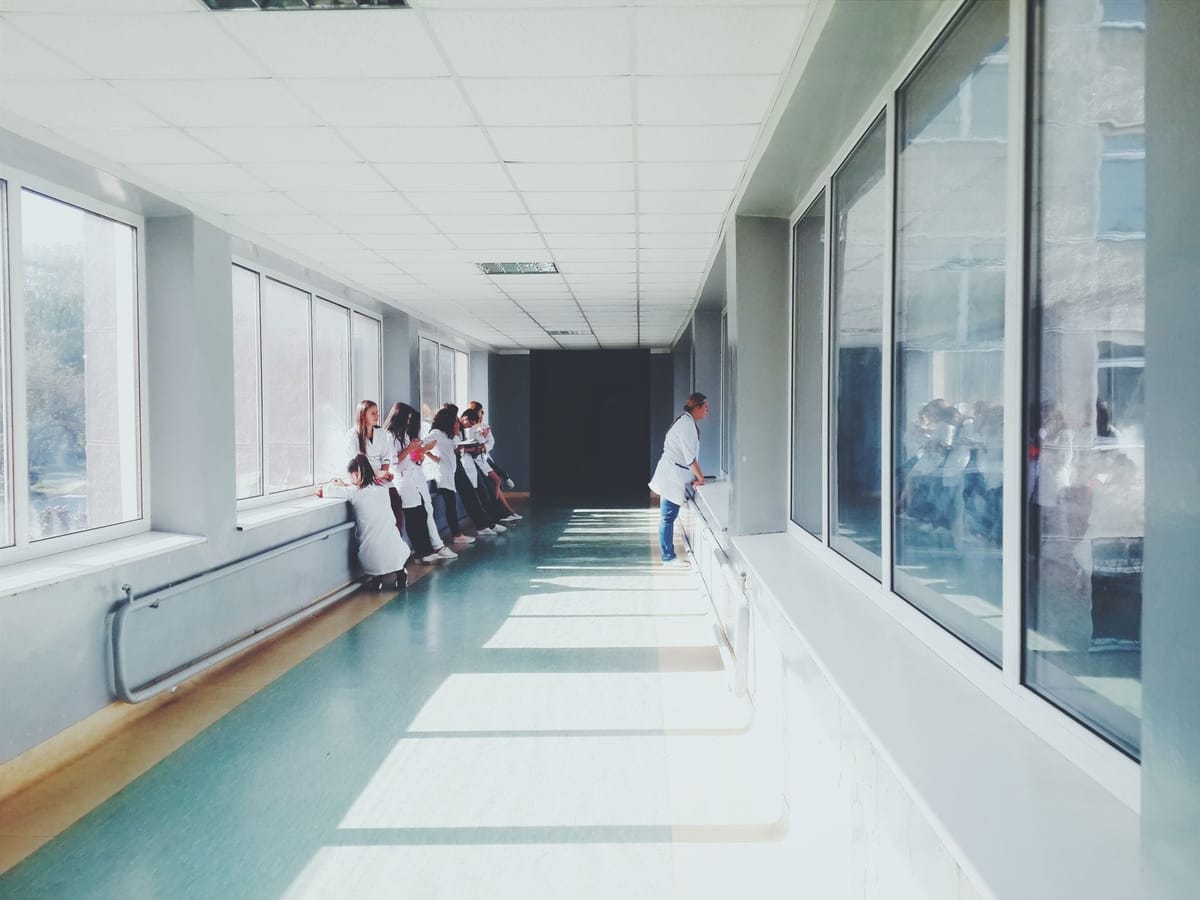
First thing to know: healthcare in Spain does not work the way it does in many other countries. No paying upfront, no waiting for a reimbursement, no compulsory top-up insurance. The public system is free at the point of use, funded by taxes. Once you've grasped that logic, everything else falls into place. (For the practical sign-up process, see our guide to the SIP card and social security.) Retired with a European state pension? Your path is simple on paper: you request an S1 form from the country that pays your pension, register it with the INSS (Spain's social security institute), and you are then covered by the Spanish public system at your home country's expense. Details in our chapter for pensioners below.
A public system: universal and regional
The National Health System covers almost the entire population. A Spanish quirk: it's run by the regions. On the Costa Blanca, part of the Valencian Community, the hospitals and health centres are run by the Generalitat Valenciana. And unlike many countries, you don't "pay and claim back": public consultations and hospital stays are free at the moment you need them.
The territory is split into health departments, each with its reference public hospital. On the Costa Blanca, these include:
- Hospital Universitario de Torrevieja (Torrevieja health department);
- Hospital de Dénia (Dénia health department);
- Hospital Universitario del Vinalopó (Elche-Crevillent health department);
- Hospital General Universitario Dr. Balmis (Alicante health department, Hospital General).
Your department depends on your address, so check which one you belong to with the Conselleria de Sanitat.
How you move through the system
Your way in is your family doctor (médico de cabecera) at your neighbourhood health centre. They handle most things and refer you to a specialist if needed. Important point: in the public system, you can't see a specialist directly: you have to go through your family doctor first. The logic runs from the health centre (close to home) up to the hospital (the heavy equipment and specialists).
What's free, and what isn't
- Free: GPs, specialists, hospital stays, surgery and A&E in the public system.
- Partly paid: medicines (the copago, worked out according to your income). A 2026 reform changed this out-of-pocket share (see the pensioners' rates below).
- Barely covered for adults: dental care (beyond extractions and emergencies) and optical care, which is why so many people turn to the private sector for these.
The real weak spot: waiting lists. At the end of 2025, more than 850,000 people were waiting for an operation (average wait around 120 days) and millions were waiting for a specialist appointment. That's the number-one reason so many expats, and Spaniards, back up the public system with private insurance.
Private care and insurance
The mutuas (private health insurers) let you skip the waits, see a specialist without a referral, and get better cover for dental and optical. Budget around €60/month on average, with entry-level plans from €20-30 (the price climbs mostly with age). Plenty of expats combine a public SIP card with private insurance, and private care is also where you'll most easily find English-speaking doctors.
Retired: how does your cover work?
If you receive a state pension from another European country and live on the Costa Blanca, the S1 form is what gives you access to the Spanish public system, not the GHIC or EHIC card. The two documents don't do the same job:
| Document | What it's for | Who issues it |
|---|---|---|
| S1 | Living in Spain permanently: you are covered by the Spanish public system, at the expense of the country paying your pension | The country paying your pension (for UK State Pensioners: NHS Overseas Healthcare Services) |
| GHIC / EHIC | Temporary stays only (holidays, short trips), not settling in Spain | Your home country's health service |
In practice, the path has three steps:
- Request the S1 from the body that pays your pension (for UK State Pensioners, NHS Overseas Healthcare Services).
- Register the S1 with the INSS (Instituto Nacional de la Seguridad Social) in Spain.
- Enrol with the regional health system to get your SIP card: the concrete steps are in our SIP card guide.
Public or private? With a registered S1, you use the public system like any other resident. Private insurance stays optional: some pensioners add it to shorten waits or to see English-speaking doctors. If your pension is not paid by a European country, the S1 doesn't apply to you: ask the INSS or the Conselleria de Sanitat which route fits your situation.
How much do pensioners pay for medicines?
Pensioners pay 10% of the price of prescribed medicines, with a monthly cap that depends on income, except above €100,000 a year (60%). These are the rates set by Real Decreto-ley 11/2026, published in the BOE on 13 May 2026 and in force since 14 May 2026:
| Annual income | Share of the price you pay | Monthly cap |
|---|---|---|
| Under €18,000 | 10% | €8.23 |
| €18,000 to €59,999 | 10% | €13.37 |
| €60,000 to €99,999 | 10% | €18.52 |
| €100,000 and over | 60% | €61.75 |
Some pensioners receiving a minimum pension supplement remain exempt, under specific conditions (Article 59 of the Ley General de la Seguridad Social). To find out whether that applies to you, check with the INSS.
How long does it take?
There is no official overall timeframe for the whole journey, from requesting the S1 to being fully covered in Spain: it varies by country and by body (the one issuing the S1, the INSS, then the regional health system). Our advice: start the process early, keep copies of every document, and ask each body for its current processing time.
What pensioners experience in practice
The same difficulties come up again and again among retirees settling on the Costa Blanca:
- Timeframes: between the S1, the INSS and the SIP card, the paperwork passes through several bodies, and the gap between arriving and being fully covered can feel long.
- Appointments: getting an appointment with your family doctor, and even more so with a specialist, often takes patience, in line with the waiting lists mentioned above.
- Language: in the public system, consultations and paperwork are in Spanish or Valencian. Many people bring someone who speaks Spanish to appointments, or turn to private care for English-speaking doctors.
- Two systems to juggle: questions about your pension and your S1 go to the paying country, while day-to-day care is handled in Spain, which can be confusing at first.
A high-quality system under strain
Despite those waits, Spain remains among the ten best healthcare systems in the world, with a life expectancy of 84, one of the highest on the planet, and for less spending per person than many of its neighbours. Spaniards give it a decent score (5.8/10), while flagging two weaknesses: those waiting lists and underfunding. In short: an excellent system, but one where patience (or insurance) is sometimes needed.
Sources
- Conselleria de Sanitat (Generalitat Valenciana)
- BOE: Real Decreto-ley 11/2026 (published 13 May 2026), pharmaceutical co-payment
- Instituto Nacional de la Seguridad Social (INSS)
- Ministry of Health: Barómetro Sanitario 2025
- Ministry of Health: SNS waiting lists
- OECD: Health at a Glance 2025, Spain
Frequently asked questions
Is public healthcare in Spain really free at the point of use?
Yes. In the public system, GP visits, specialists, hospital stays, surgery and A&E are free when you need them, funded by taxes with no pay-and-claim. Medicines carry a means-tested co-payment (copago), and dental and optical care are barely covered for adults.
As a British, Irish or American resident, how do I access the public system?
You must first register on the padrón and enrol in the regional system to get your SIP card. Irish citizens access it as EU nationals, while UK State Pensioners can use an S1 form (a UK GHIC card is for tourists only, not residents); Americans and other non-EU residents typically rely on private cover until eligible.
Should I take out private insurance as well?
Many expats do, mainly to skip long waiting lists (over 850,000 people were awaiting an operation in late 2025) and to find English-speaking doctors more easily. Budget around £50 (roughly €60) a month on average, with entry-level plans from about €20-30, rising mostly with age.
I get a European state pension: how do I get public healthcare on the Costa Blanca?
Request an S1 form from the country that pays your pension (for UK State Pensioners, NHS Overseas Healthcare Services), register it with the INSS in Spain, then enrol to get your SIP card. You are then covered by the Spanish public system at your home country's expense. There is no official overall timeframe: it varies by country and by body.
Can I use my GHIC or EHIC if I live on the Costa Blanca?
No. The GHIC and EHIC only cover temporary stays, such as holidays, not settling permanently in Spain. Pensioners who live on the Costa Blanca need an S1 registered with the INSS to be covered by the public system.
How much do pensioners pay for prescriptions in Spain in 2026?
Since 14 May 2026 (Real Decreto-ley 11/2026), pensioners pay 10% of the price with a monthly cap of €8.23 (income under €18,000), €13.37 (€18,000 to €59,999) or €18.52 (€60,000 to €99,999). From €100,000 a year, it's 60% with a €61.75 monthly cap. Some pensioners on a minimum pension supplement are exempt under conditions: check with the INSS.
Last verified: 04/10/2026. Procedures, taxes and prices change fast: before you go anywhere, always check the official source (links above). The Daily Costa Blanca is an AI-assisted publication with human review. Spotted a mistake? Write to hello@thedailycostablanca.com or visit thedailycostablanca.com.
Le Livre blanc 2026 de l'expat
NIE, empadronamiento, fiscalité, école, logement : tout l'essentiel pour s'installer, réuni dans un guide PDF. Laisse ton e-mail, on te l'envoie.
🎉 Et voilà ! Ton Livre blanc 2026 de l'expat s'ouvre ici :
Ouvrir le Livre blanc 2026Dernière étape pour rejoindre l'aventure : confirme ton inscription dans l'e-mail qu'on vient de t'envoyer.
Réagis à cet article