
What is really changing in Spain's highway code in 2026?
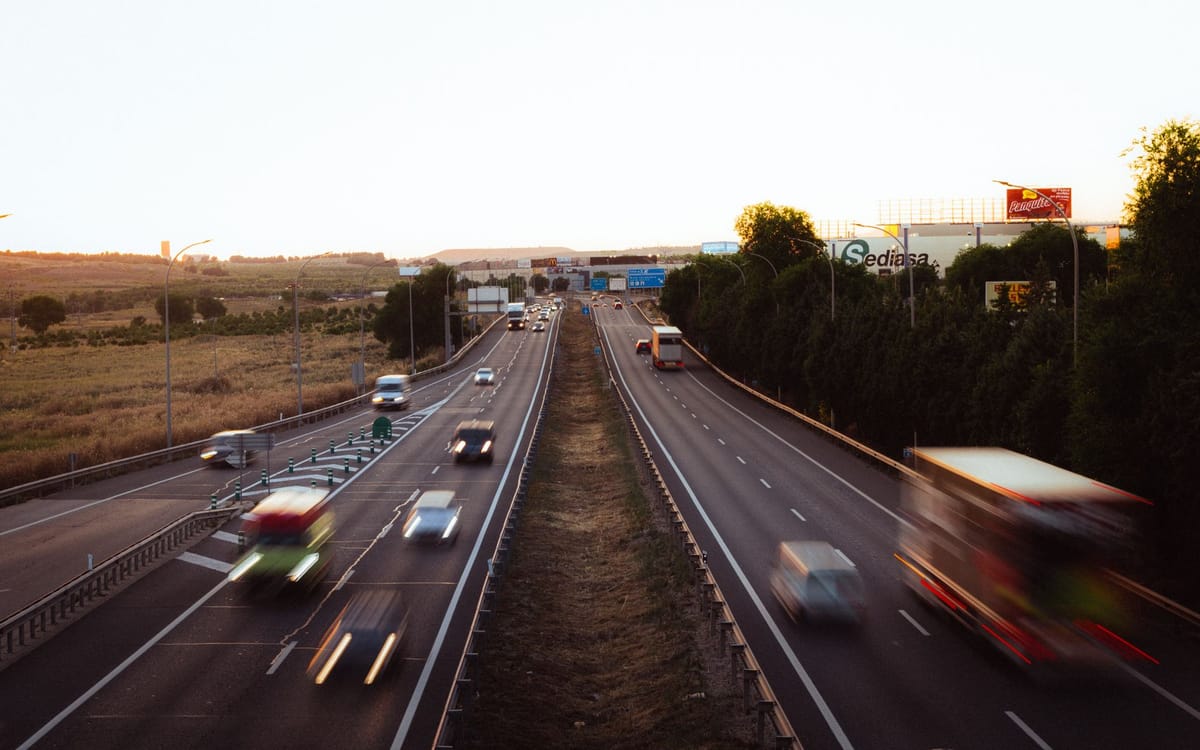
The big reform of the Spanish highway code (the Reglamento General de Circulacion) takes effect on 1 October 2026 for everything concerning cyclists, electric scooters and motorcyclists; by contrast, the V16 warning beacon has been mandatory since 1 January 2026, and penalties for phone use while driving have existed since 2022, simply enforced more strictly this year. Two timelines not to confuse, then: what already applies and what arrives in two months. Here is the real state of play, verified on 30 July 2026, and what it actually changes if you drive between Alicante, Benidorm and Torrevieja.
What is already in force this summer 2026?
Three genuine rules, but none of them new. The connected V16 warning beacon has been mandatory since 1 January 2026 to signal a stopped vehicle or an accident: it replaces the old warning triangles as the only device recognised by Spain's traffic authority (DGT), although the DGT still tolerates using both together for now (source: DGT, statement of 25 November 2025, and carwow.es, 2026). Not having one costs 80 euros (40 euros with a quick payment discount), with no points lost. On phones, the rule has not changed since the road safety law reform of March 2022: holding one in your hand costs 200 euros and 6 points, handling it while mounted on a holder (including GPS use) costs 200 euros and 3 points, even when stopped at a red light or in traffic (source: moncloa.com, 13 June 2026; merca2.es, 20 July 2026). What is genuinely new in 2026 is the enforcement: more than 216 AI-powered cameras have been rolled out across the network to detect phone use. Wearing one or two earphones while driving has been banned since that same 2022 text (article 18.2 of the regulation), penalised at 200 euros and 3 points, except for an approved device built into a motorcycle helmet.
What changes on 1 October 2026 with RD 518/2026?
A text focused on protecting vulnerable road users, published but not yet enforceable. Real Decreto 518/2026, published in the Boletin Oficial del Estado on 26 June 2026, amends the 2003 general traffic regulation "on the protection of vulnerable road users" (source: BOE-A-2026-13889; DGT, official statement of 23 June 2026). Its key feature: it only takes effect on 1 October 2026, so as this is being read, none of these rules are yet enforceable. Here are the confirmed changes arriving in two months.
| Measure | Status as of 30 July 2026 | Planned penalty |
|---|---|---|
| Mandatory V16 beacon | In force since 1 January 2026 | 80 euros (40 with quick payment), 0 points |
| Phone held in hand | In force since 2022, stricter enforcement in 2026 | 200 euros, 6 points |
| Earphones in both ears | In force since 2022 | 200 euros, 3 points |
| Overtaking a cyclist: 1.5m + -20 km/h | Takes effect 1 October 2026 | Varies by severity |
| Helmet, minimum age 15, pavements banned for e-scooters (VMP) | Takes effect 1 October 2026 | 200 euros without a helmet |
| Gloves and closed shoes for motorcyclists (out of town) | Takes effect 1 October 2026 | Varies by severity |
The text also revises seatbelt exemptions for certain professions and creates a new title VI dedicated to urban traffic: residential priority zones, safe school routes left to town halls' own initiative, and stronger protection on pavements and pedestrian areas. One separate novelty: article 92.4, which regulates the parking of motorhomes and camper vans for the first time.
Electric scooters: what new rules apply to e-scooters (VMP)?
From 1 October 2026, riding an electric scooter (VMP, personal mobility vehicle) on the Costa Blanca will require an approved helmet, a minimum age of 15, lights on at all times, and a formal ban on pavements; riding outside built-up areas remains banned except on authorised cycle lanes, with town halls setting the exact zones (source: DGT, statement of 23 June 2026; race.es, 2026). That applies as much to Alicante and Benidorm, where shared e-scooters have multiplied in recent years, as to Torrevieja or Denia. A separate strand, already under way through 2026: mandatory third-party liability insurance for electric scooters, with registration on the light-vehicle register and a visible identification sticker; riding without that insurance carries a fine of between 250 and 800 euros depending on the source consulted (movilidadelectrica.com, 2026; race.es, 2026). If you are also insuring a car or a scooter, our guide to insurance on the Costa Blanca explains what differs from home.
Overtaking a cyclist: what's the new rule on Costa Blanca roads?
From 1 October 2026, overtaking a cyclist (or several) on an out-of-town road will require a minimum lateral distance of 1.5 metres and a speed reduction of at least 20 km/h below the road's speed limit, with a full lane change in some cases (source: BOE-A-2026-13889; motor16.com, 2026). On the Costa Blanca, that directly affects roads heavily used by cycle tourists, such as the inland stretches towards Alcoy or Guadalest, or certain sections of the N-332 where cars and bikes share the road. If you cycle regularly in the region, our guide to cycling on the Costa Blanca (greenways and mountain biking) lists the safest routes precisely to avoid this kind of encounter with traffic.
Why is speeding the top reason for losing points in Alicante?
Because it is by far the most penalised offence in the province: 13,403 drivers fined for speeding, or 36.8 percent of the province's total of 36,397 sanctions, ahead of miscellaneous offences (11,494 cases) and drink-driving (4,415 cases), according to the DGT's annual file of finalised sanctions (source: The Leader, 26 May 2026, DGT data). The coast concentrates a good share of the monitoring: the N-332 has more than 15 fixed speed cameras and 6 mobile-checkpoint stretches between Santa Pola, Torrevieja, Guardamar del Segura, Altea and Calpe (source: traficohoy.com, 2026). Worth noting too is a national trend independent of any reform: the DGT occasionally lowers certain motorway and dual-carriageway sections to 100 km/h through a simple change of signage, without touching the general regulation, a practice that has spread further in 2026 (source: autonocion.com, 2026). In other words: the theoretical maximum speed (120 km/h on a dual carriageway for a car) stays the same, but it can be lowered locally by sign, including on stretches you drive every day.
What does this actually change for a Costa Blanca resident?
Three habits to adopt before 1 October 2026. First, check that your V16 beacon is properly approved and connected to the DGT 3.0 platform: that is already enforceable today, not in two months. Second, if you or your children use an electric scooter in town (Alicante, Benidorm, Torrevieja), sort out a helmet and insurance before the new school year, since checks will intensify once the new rule takes effect. Third, if you drive on inland roads or the N-332 where cycle tourists and cars share space, build in the 1.5-metre and minus-20-km/h rule now: better to get into the habit before it becomes enforceable. For everyday trips without a car (bus, tram, train), our guide to getting around the Costa Blanca remains a useful alternative if you would rather avoid the most heavily monitored areas in summer.
In brief
- 1 October 2026 marks the entry into force of RD 518/2026 (cyclists, scooters, motorcyclists, seatbelt exemptions, urban rules).
- The V16 beacon has already been mandatory since 1 January 2026 (80 euros, 0 points if missing).
- Phones and earphones have been penalised since 2022 (200 euros, 3 to 6 points), with stricter AI-camera enforcement this year.
- Overtaking a cyclist will require 1.5 metres of distance and -20 km/h from 1 October 2026.
- 13,403 speeding offences were sanctioned in Alicante province in a year, 36.8 percent of all offences (DGT, via The Leader, May 2026).
Frequently asked questions about Spain's highway code reform
Is the highway code reform already in force in Spain?
No, not for most of it. RD 518/2026 (cyclists, scooters, motorcyclists, seatbelts, urban rules) only takes effect on 1 October 2026. Only the V16 beacon (since 1 January 2026) and the penalties for phones and earphones (since 2022) are already enforceable today.
What is the risk of using your phone while driving in Spain in 2026?
200 euros and up to 6 points if you hold it in your hand, 200 euros and 3 points if you handle it while it is mounted on a holder, even stopped at a red light or in traffic. This is not new: the rule dates from the 2022 reform, but it is better detected since 2026 thanks to AI cameras.
Will you need a helmet to ride an electric scooter on the Costa Blanca from October 2026?
Yes. An approved helmet is mandatory, along with a minimum age of 15, a ban on pavements and lights on at all times, on top of the third-party liability insurance already required. The exact riding zones remain set by each town hall.
What distance must you keep to overtake a cyclist from 1 October 2026?
At least 1.5 metres of lateral distance and a speed reduced by at least 20 km/h below the road's limit, with a full lane change in some cases. A rule worth adopting now on the roads most used by cycle tourists in the province.
Sources: BOE-A-2026-13889, Real Decreto 518/2026 of 24 June 2026, published in the Boletin Oficial del Estado on 26 June 2026 (the official reform text); DGT, official statement of 23 June 2026 (RD on vulnerable users) and statement of 25 November 2025 (V16 beacon); moncloa.com, 13 June 2026, and merca2.es, 20 July 2026 (AI-camera enforcement of phone use while driving); motor16.com, 2026 (penalties and overtaking distances); race.es and movilidadelectrica.com, 2026 (rules and insurance for electric scooters); The Leader, 26 May 2026, DGT data (offences by province in Alicante); traficohoy.com, 2026 (speed camera placement on the N-332); autonocion.com, 2026 (occasional speed reductions through signage).
Information verified in August 2026. The Daily Costa Blanca is an AI-assisted publication with human review.
Le Livre blanc 2026 de l'expat
NIE, empadronamiento, fiscalité, école, logement : tout l'essentiel pour s'installer, réuni dans un guide PDF. Laisse ton e-mail, on te l'envoie.
🎉 Et voilà ! Ton Livre blanc 2026 de l'expat s'ouvre ici :
Ouvrir le Livre blanc 2026Dernière étape pour rejoindre l'aventure : confirme ton inscription dans l'e-mail qu'on vient de t'envoyer.
Réagis à cet article