
Shared mobility on the Costa Blanca: what really exists (2026)
If you are arriving from London, Madrid or Barcelona, brace yourself for a reversal: on the Costa Blanca, shared mobility is far thinner on the ground than in a big city. No fleet of municipal bikes on every corner, no scooters to unlock with an app on every pavement. Here is the real picture in 2026: what exists, what does not, what it costs and what the law says.
The big absentee: no public bike share
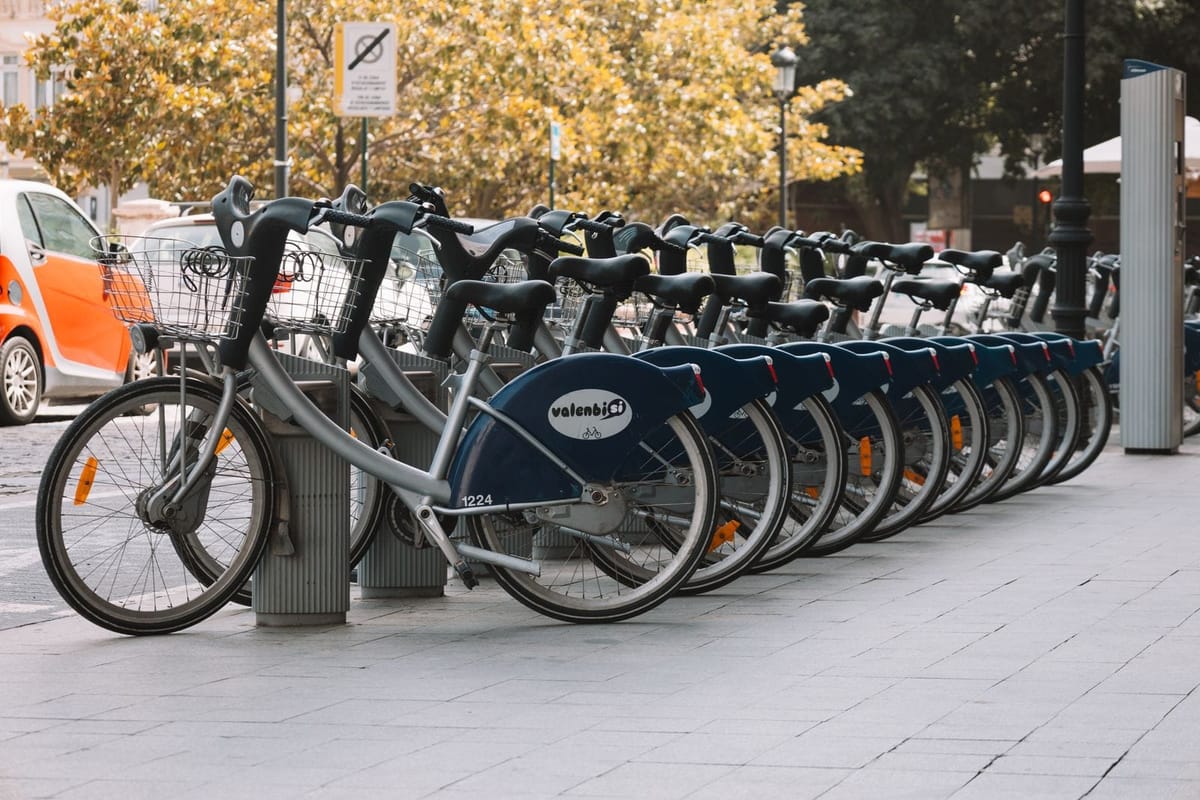
Let us start with the surprise. Unlike Valencia and its Valenbisi, there is no municipal bike-share scheme on the Costa Blanca. Alicante had its own, Alabici, but it closed in 2023, short of subscribers and hit by vandalism. Nothing has replaced it since. So if you want to cycle day to day, you need your own bike, or you go through a private hire shop (tourist outlets, by the hour or the day). That is the first thing to take on board: here, a bike is a purchase, not a shared subscription.
Scooters and mopeds: a fragmented offer
Free-floating (pick up and drop off wherever you like) is not set up the way it is in big cities. In concrete terms:
- Shared e-scooters: no reliable, permanent network. To ride a scooter you either have your own (mind the 2026 rules, see below) or go for a shop rental from a fixed base.
- Shared mopeds: a few rental apps offer them, but nothing like Valencia's density. Depending on where you live, it may not exist at all; check your specific town.
In short, do not build your mobility around shared schemes. The two safe bets here are ride-hailing and taxis and, for many, a private car.
Ride-hailing and taxis: the apps that work
Good news: the big apps work well, at least in Alicante:
- Bolt: the platform launched its ride-hailing in Alicante (and Valencia) in early 2026, with electric cars.
- Cabify: well established, with a service regulated by Alicante city council.
- Uber: available in Alicante, as ride-hailing or taxi depending on the moment.
- FreeNow: to hail an official taxi from your phone.
On the taxi side, official cabs run on the meter, with a fixed fare to and from the airport. Put simply: Bolt, Cabify or Uber for a car with a driver; FreeNow for an official taxi.
The 2026 rules, worth knowing if you own a scooter
2026 changes the game for e-scooters and personal mobility vehicles (VMP). If you ride your own machine, these rules are national and apply everywhere:
- Compulsory insurance since 2 January 2026: third-party liability cover is now required. Riding without it means a fine of 600 to 1,000 euros and the machine being impounded.
- DGT registration: every scooter must be entered in the DGT's register of light personal vehicles, with a visible identifier.
- Minimum age: 16.
- Where to ride: like bikes, on cycle lanes and the road. Banned on pavements and pedestrian areas (a fine of around 200 euros). Speed capped at 20 km/h.
- One rider only, no phone or earphones, and the same alcohol limits as behind the wheel.
With a supervised rental, the operator provides the insurance and you have nothing to sort out; it is when you buy your own machine that you must remember to insure and register it.
What it costs: the centre to San Juan comparison
A typical journey of about 7 km, from central Alicante to San Juan beach:
| Mode | Trip price | Good to know |
|---|---|---|
| TRAM | ~ €1.45 to €2.80 | Lines L3 or L4 to San Juan. The cheapest. |
| Shared / rented moped | ~ €4 to €6 | Subject to availability. Licence required, helmet provided. |
| Ride-hailing (Bolt, Cabify, Uber) | ~ €10 to €16 | Depending on time and demand. |
| Taxi | ~ €12 to €18 | Official meter, daytime rate. |
| Shared bike / scooter | Unavailable | No public network on the Costa Blanca. |
Indicative prices for July 2026, variable with time and demand. The lesson: for daily life, count on the TRAM where it runs, and on ride-hailing or your own car for the rest. For the detail of the networks, see our guide to getting around the Costa Blanca, and for the overall budget, our cost of living.
Sources
- Ciclosfera: the closure of Alabici in Alicante
- Valencia Plaza: Bolt launches ride-hailing in Alicante and Valencia (2026)
- Cabify: fares and service in Alicante
- RACE: e-scooter regulations 2026
Frequently asked questions
Is there bike share on the Costa Blanca?
No. Alicante had Alabici, which closed in 2023, and nothing has replaced it. There is no equivalent of Valencia's Valenbisi here: to cycle, you need your own bike or a private hire shop.
Do Uber, Bolt and Cabify work in Alicante?
Yes. Bolt (launched in early 2026), Cabify (regulated by Alicante city council) and Uber are available, plus FreeNow for official taxis. It is the most reliable option for a ride without a car.
Can I ride an e-scooter?
Yes, with your own machine, but since January 2026 you need third-party liability insurance and DGT registration, the minimum age is 16, and riding on pavements is banned. Shared schemes, meanwhile, are not set up here.
Information verified in July 2026. Fares, zones and regulations change: always confirm with the official source before you travel. The Daily Costa Blanca is an AI-assisted publication with human review. Spotted a mistake? Write to hello@thedailycostablanca.com or visit thedailycostablanca.com.
Le Livre blanc 2026 de l'expat
NIE, empadronamiento, fiscalité, école, logement : tout l'essentiel pour s'installer, réuni dans un guide PDF. Laisse ton e-mail, on te l'envoie.
🎉 Et voilà ! Ton Livre blanc 2026 de l'expat s'ouvre ici :
Ouvrir le Livre blanc 2026Dernière étape pour rejoindre l'aventure : confirme ton inscription dans l'e-mail qu'on vient de t'envoyer.
Réagis à cet article