
Mosquitoes on the Costa Blanca: an investigation into your summer enemy
It is 3.12 in the morning. The room is dark, the window cracked open because it is 28 degrees, and suddenly that sound. That high-pitched eeeeee that grazes your ear, disappears, comes back. You switch on the light. Nothing. You switch it off. Eeeeee. Welcome to the second national sport of summer on the Costa Blanca, just after the siesta: the mosquito hunt. Here is our investigation, light-hearted and very serious at once, into your new intimate enemy.
Who is actually biting you?
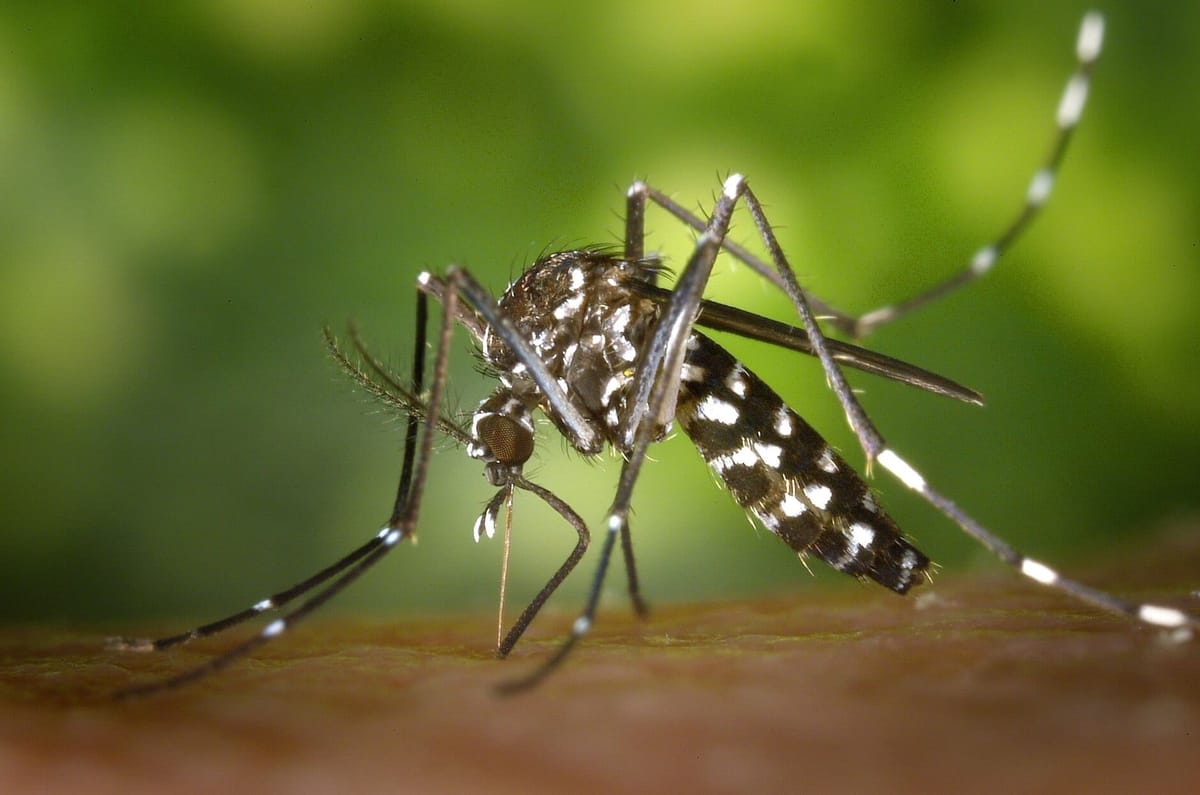
Two main suspects. The first, Culex pipiens, the common mosquito, brownish, discreet, mostly active at night: he is the DJ behind the 3am eeeee. The second is more recent and more stubborn: the tiger mosquito (Aedes albopictus), small, black striped with white, with zebra-patterned legs. The trait that changes everything: this one bites in broad daylight, often on the ankles and calves, in silence, in the shade of a terrace.
The tiger is not a local: it came from Asia through global trade, settled along the Spanish Mediterranean coast in the 2010s, and is now part of the scenery. It does not need a marsh: a flowerpot saucer is enough.
Why the Costa Blanca is a mosquito paradise
Three ingredients, and the coast ticks every box. Heat and humidity, which stretch the season longer year on year. Water: the Pego-Oliva marshland to the north, and the river mouths and irrigation network of the Vega Baja to the south, form fine natural nurseries for Culex. And above all habitat: tens of thousands of villas with watered gardens, pools kept in varying states, drain covers, saucers and watering cans. The tiger mosquito lays its eggs in a few millilitres of standing water. In other words: the wetland in the distance is the community's problem; the mosquitoes devouring you on your terrace are born, nine times out of ten, at your place or your neighbour's, often in a holiday pool left to go green.
The serious bit: just annoying, or dangerous?
In the vast majority of cases, a bite here is an itchy bump, full stop. But let us be factual: the tiger mosquito is a potential vector for viruses such as dengue, Zika and chikungunya, and in recent years Spain has recorded a few locally acquired dengue cases, rare and closely monitored by the health authorities. No need to panic: the individual risk remains very low. But that is why councils treat the drains and ask you to empty standing water: the fight is a collective one.
Why you and not everyone else?
The lottery is unfair and well documented: the CO2 you breathe out, your body heat, your smell (genetics, sweat, lactic acid) and even your blood group all play a part. Beer and evening exercise raise your CO2 and temperature: the terrace-mojito-bare-calves combo is a formal invitation.
How to win the war (or at least a truce)
At home: window screens (the best-value investment of your summer), a fan at night (the tiger flies badly in moving air), and a weekly hunt for standing water: saucers, buckets, gutters, terrace drains, the dog's bowl, and the kids' paddling pool. On you: repellents based on DEET, icaridin or IR3535 for exposed evenings, loose light-coloured clothing, ankles covered at aperitivo time. Ultrasonic gadgets, on the other hand, have never proved their worth: save your euros. And if you live in an urbanización, the most effective conversation of the summer may be the one with the neighbour whose pool has turned green.
Learning to live with it (without loving it, let's be honest)
The mosquito is part of the Mediterranean package, along with the sun, the sea and the endless evenings. Screens fitted, terrace cleared, repellent in the drawer: you will not win the war, but you can win every battle that matters, the ones that decide your nights. For the rest of summer's pleasures and traps, see our guide to jellyfish.
Information verified in July 2026. For any unusual reaction to a bite (a fever after travelling, an allergic reaction), see your health centre: this article is not a substitute for medical advice. The Daily Costa Blanca is an AI-assisted publication with human review. Spotted a mistake? Write to hello@thedailycostablanca.com or visit thedailycostablanca.com.
Le Livre blanc 2026 de l'expat
NIE, empadronamiento, fiscalité, école, logement : tout l'essentiel pour s'installer, réuni dans un guide PDF. Laisse ton e-mail, on te l'envoie.
🎉 Et voilà ! Ton Livre blanc 2026 de l'expat s'ouvre ici :
Ouvrir le Livre blanc 2026Dernière étape pour rejoindre l'aventure : confirme ton inscription dans l'e-mail qu'on vient de t'envoyer.
Réagis à cet article