
Is the Costa Blanca more humid than Valencia, and does it matter?
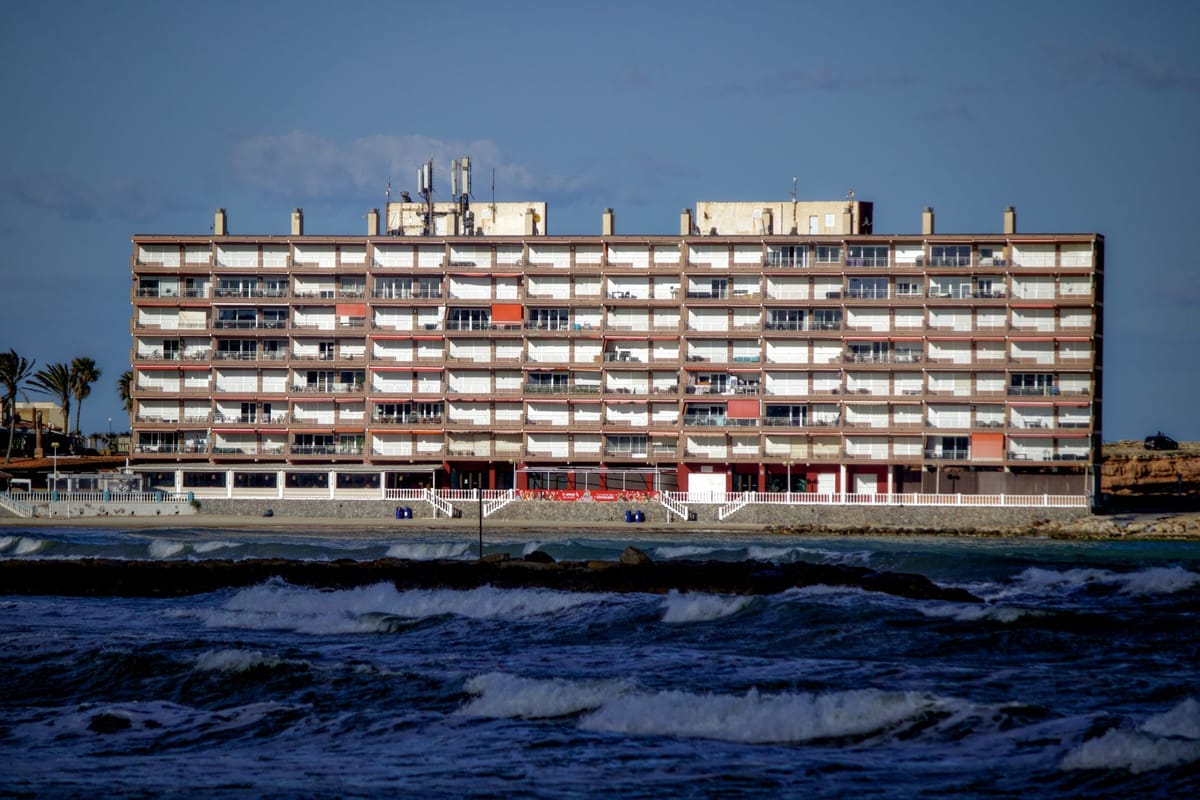
On the Costa Blanca, average relative humidity sits around 66 percent year-round in Alicante, with monthly values between 63 percent and 70 percent and an autumn peak in September and October, according to official AEMET climate data. In other words, it is almost the same level as Valencia (65 percent), and the difference is nothing dramatic. What genuinely changes here is not the number, it is the cause: on the coast, the friction point is not old housing on clay soil, it is the seafront, the salt spray that eats into your air conditioning, and the Llevant wind that thickens the air in summer. This guide covers the whole picture, from health to walls to your rights as a tenant, with the Costa Blanca angle.
Is Alicante really more humid than Valencia?
No, or only negligibly so. AEMET climate data (Alicante station, code 8025, 1981-2010 reference period) gives an average annual relative humidity of 66 percent, against 65 percent for Valencia (station 8416, same period). One percentage point of difference: officially a touch higher, but in practice you would not feel it in your living room. So be wary of claims that the Costa Blanca is "much more humid": that is false on the headline number.
The interesting difference lies elsewhere, in the seasonal rhythm. Where Valencia climbs mostly in summer (June to August), Alicante hits its peak in autumn, with 69 percent in September and 70 percent in October. That is the season of Mediterranean rains and the notorious gota fria, when the air loads up with water. In short: the real question is not whether you are more or less humid than in Valencia, but understanding where the humidity in your home comes from, because the answer dictates the fix.
| Month | Average relative humidity in Alicante |
|---|---|
| January | 67% |
| February | 66% |
| March | 65% |
| April | 63% |
| May | 64% |
| June | 63% |
| July | 65% |
| August | 67% |
| September | 69% |
| October | 70% |
| November | 69% |
| December | 68% |
Source: AEMET, standard climate values, Alicante station (8025), 1981-2010 period. You can see the spring and early-summer dip, then the autumn rebound.
Why does the air turn so clammy in summer? The Llevant wind
This is the real coastal quirk. The Llevant (levante in Spanish) is a warm, humid wind that blows from the east and south-east, straight off the Mediterranean. When it settles in, it pushes air loaded with sea vapour towards the coast. The result: at 30 to 35 degrees, the clammy feeling ratchets up, the air sticks to your skin, washing dries badly and nights feel heavy even when the thermometer shows nothing extraordinary.
It is a well-documented weather mechanism along Spain's entire eastern coast. That said, be careful with the figures circulating online: some consumer sites quote very high humidity levels tied to the levante, but these are not values certified by AEMET. Keep the principle in mind (the air is markedly clammier during levante episodes) without pinning yourself to an unofficial precise percentage. What matters practically is the habit: on those days, dehumidifying becomes your best friend, and we come back to that below.
What health risks does humidity carry?
Comfort is not the only issue. According to the World Health Organization's guidelines on indoor air quality (WHO guidelines for indoor air quality: dampness and mould, WHO, 2009), persistent dampness and mould growth in a home increase the risk of respiratory symptoms, allergies and asthma, and can affect the immune system.
People with allergies or atopic conditions are the most exposed, but the WHO notes that effects also reach people without them: coughing, a runny nose, an irritated throat, disturbed sleep. The core recommendation fits in one sentence: it is best to avoid or limit persistent dampness and microbial growth on surfaces and within the structure of the home. So the aim is not just to treat symptoms, but to tackle the source in the housing itself. If humidity keeps triggering breathing problems, talk to your doctor: our guide to the Spanish healthcare system explains how the care pathway works here.
How do you recognise signs of damp in your home?
Damp leaves very telling marks. Learning to read them means acting before it settles in:
- Black or greenish stains in corners, behind furniture, on the bathroom ceiling: that is mould, the clearest signal.
- Condensation on windows in the morning, when vapour-laden air meets cold glass.
- A stubborn musty smell that returns even after airing the room.
- Paint that bubbles, blisters or flakes, plaster that peels off in patches.
- Clothes, leather and documents going mouldy or warping in poorly ventilated wardrobes.
- Saltpetre and rings low on the walls, in the first few centimetres from the floor: the signature of rising damp through capillary action. By contrast, a stain that spreads down from the ceiling or starts on an exposed wall points instead to water ingress.
The height of the mark tells you the origin. A mark that starts at the floor and climbs is capillary rising damp. A mark that comes from above or from a wall exposed to sea spray and rain is water ingress or a waterproofing fault. On the coast, that second case is common in seafront buildings. This distinction changes everything, including who pays for the repair.
What humidity level is normal, and when does it become a problem?
The best judge is a small hygrometer (under 15 euros) placed in the living room and bedroom. The recommended indoor relative humidity range is between 40 and 60 percent, according to ADEME (the French environment and energy agency). Allergists and consumer bodies even advise staying under 50 percent in bedrooms, to limit dust mites, the leading cause of respiratory allergy. Above 60 to 70 percent, mould takes hold much faster.
| Indoor relative humidity | What it means | Practical consequences |
|---|---|---|
| Under 40% | Air too dry | Tight throat and skin, dry eyes. Below the range recommended by ADEME. |
| 40 to 60% | Ideal range (ADEME) | Optimal comfort, dust mites and mould kept under control. Aim for under 50% in bedrooms. |
| 60 to 70% | Worth watching | Dust mites multiply, mould settles on cold surfaces. Time to act. |
| Over 70% | Persistently excessive | Recurring mould and a higher respiratory risk documented by the WHO. A structural cause is likely. |
On the Costa Blanca, briefly exceeding 60 percent indoors in autumn or during a levante episode is nothing abnormal given the outdoor humidity. The goal is not desert-dry air, but staying within the 40 to 60 percent range as often as possible, and not letting mould take hold.
What changes when you live by the sea? Salt
This is the most coast-specific friction point, one you do not encounter in central Valencia. Right on the seafront, the air carries salitre, fine droplets of salt water lifted by waves and wind. That salt settles everywhere, and it particularly attacks your air conditioning.
Industry professionals describe a phenomenon specific to the coast: corrosion of the aluminium and copper in outdoor AC units, and sulphation of the electrical connectors. A unit that would run for years without trouble further inland can oxidise much faster facing the sea. Their recommendation, to be taken as professional advice rather than an official statistic, is cleaning every three to four months for seafront homes, against a standard yearly service further from the coast. Rinsing the outdoor unit with fresh water and having the connections checked makes a real difference to the appliance's lifespan.
Another local nuance: the housing stock has a different profile. In Valencia, the dominant problem comes from old buildings on the clay-rich huerta, with their capillary rising damp. On the Costa Blanca, it is more often recent construction exposed to sea spray right on the front line, where the issue is less about rising damp and more about salt attack and waterproofing against the autumn rains. Two different causes call for two different kinds of vigilance.
What can you do day to day to lower humidity?
Plenty of simple habits genuinely move the hygrometer needle. In order of common sense:
- Air the home for 10 minutes a day, opening two facing windows in the morning to create a draught that clears out the night's moisture. Free and quick.
- Ventilate the bathroom and kitchen during and after a shower or cooking: these are the two rooms that produce the most vapour.
- Do not dry laundry indoors. A load of washing drying in the living room releases several litres of water into the air. On the coast, a balcony or terrace does the job almost year-round.
- Use the air conditioning's "dry" (dehumidify) mode, often shown as a water-drop icon: it dries the air without over-cooling, invaluable on clammy levante days.
- Invest in an electric dehumidifier for rooms that stay damp, especially in autumn: it is the most effective tool for holding the 40 to 60 percent range.
- Place salt, calcium chloride or silica gel in wardrobes, under a sink or in a closet, to protect clothes and documents in small enclosed spaces.
Two extra coastal habits: pull furniture away from cold or exposed walls to let air circulate behind it, and regularly rinse the AC's outdoor unit with fresh water if you live near the beach, to slow salt corrosion.
When daily habits are not enough, who do you call?
Let's be honest about the limits. A dehumidifier, airing and the dry mode act on air humidity (condensation, everyday vapour, levante episodes). They do nothing against water ingress through a facade or stubborn rising damp.
Signs that mean it is time to call a professional: rings that keep coming back even after cleaning, paint that keeps blistering in the same spot, a stain that grows season after season, especially after the autumn rains. At that point you are talking about structural treatment (redoing facade or roof waterproofing, drainage, a barrier against capillary damp), not DIY. Always ask for a survey with a humidity reading and get several quotes before committing. And if the issue is your salt-corroded air conditioning, you need an AC technician, not a damp specialist.
Renting a damp home: what are your rights?
Spanish law is clear, and it applies everywhere, Costa Blanca included. The Ley de Arrendamientos Urbanos (LAU), in article 21, obliges the landlord (arrendador) to carry out all repairs needed to keep the home fit for habitation, unless the damage is caused by the tenant.
In practice: when the damp comes from the roof, the facade, a shared wall or common installations, responsibility falls entirely on the landlord. Article 21.1 bans any lease clause that would make you responsible for it, and the landlord cannot raise the rent to fund these mandatory repairs. If the building is under shared ownership and the problem comes from a common element, the owners' association pays, but your point of contact remains your landlord, who has to take it up with the association, not you.
The steps to follow: report it in writing (an email or a dated, provable burofax), with photos, spelling out the likely origin (capillary damp, water ingress, facade). Keep a record of everything. To set the framework properly from the start, see our guide to renting a flat on the Costa Blanca, which covers the lease and each party's obligations.
Does home insurance cover humidity damage?
It all depends on the origin. As a general rule, home insurance (seguro de hogar) covers sudden, accidental water damage: a burst pipe, a leak, damage coming from the flat upstairs. One-off, accidental events.
By contrast, damp linked to a maintenance failure or a structural problem (capillary damp, a porous facade, an ageing roof, chronic condensation) is usually excluded: the insurer treats it as a defect to be repaired, not an accidental claim. Hence the importance of identifying the origin, both for your claim and to know who pays. Before you sign up, read the exclusions line by line: our guide to insurance in Spain (home, car and the rest) explains what to check.
Frequently asked questions about humidity on the Costa Blanca
Is the Costa Blanca more humid than Valencia?
Not really. AEMET gives an average annual relative humidity of 66 percent in Alicante against 65 percent in Valencia: one percentage point, imperceptible day to day. The difference lies in the cause (salt spray and the levante wind on the coast) and the calendar (an autumn peak in Alicante, more of a summer one in Valencia), not the overall level.
Why is the air so heavy on some summer days?
Often the Llevant (levante) wind, a warm, humid wind off the Mediterranean. It pushes vapour-saturated air towards the coast and heightens the clammy feeling, even without a record temperature. On those days, the AC's dry mode and a dehumidifier are your best allies.
Does sea salt really damage air conditioning?
Right on the coast, yes, according to AC professionals: salt spray corrodes the aluminium and copper in outdoor units and sulphates the connectors. They recommend cleaning every three to four months on the seafront (professional advice, not an official statistic), against a yearly service further inland. Rinsing the unit with fresh water helps a lot.
What humidity level should you aim for at home?
Between 40 and 60 percent according to ADEME, ideally under 50 percent in bedrooms to limit dust mites (the leading cause of respiratory allergy, according to allergists and consumer bodies). A hygrometer costing a few euros lets you track this room by room.
Sources: AEMET (Spain's national meteorological agency), standard climate values, Alicante station (code 8025) and Valencia station (8416), 1981-2010 reference period, for average annual and monthly relative humidity. World Health Organization, WHO guidelines for indoor air quality: dampness and mould, WHO, 2009, for the health effects of humidity and mould. ADEME (the French environment and energy agency) and French consumer bodies, for indoor relative humidity thresholds (40 to 60 percent, under 50 percent in bedrooms). Ley de Arrendamientos Urbanos (LAU), article 21, for landlord obligations. On AC corrosion from salt: professional industry opinion, to be treated as such rather than an official statistic. On the Llevant wind: a documented weather mechanism, without an AEMET-certified humidity figure.
Information verified in August 2026. The Daily Costa Blanca is an AI-assisted publication with human review.
Le Livre blanc 2026 de l'expat
NIE, empadronamiento, fiscalité, école, logement : tout l'essentiel pour s'installer, réuni dans un guide PDF. Laisse ton e-mail, on te l'envoie.
🎉 Et voilà ! Ton Livre blanc 2026 de l'expat s'ouvre ici :
Ouvrir le Livre blanc 2026Dernière étape pour rejoindre l'aventure : confirme ton inscription dans l'e-mail qu'on vient de t'envoyer.
Réagis à cet article