
Which Costa Blanca food products are legally protected?
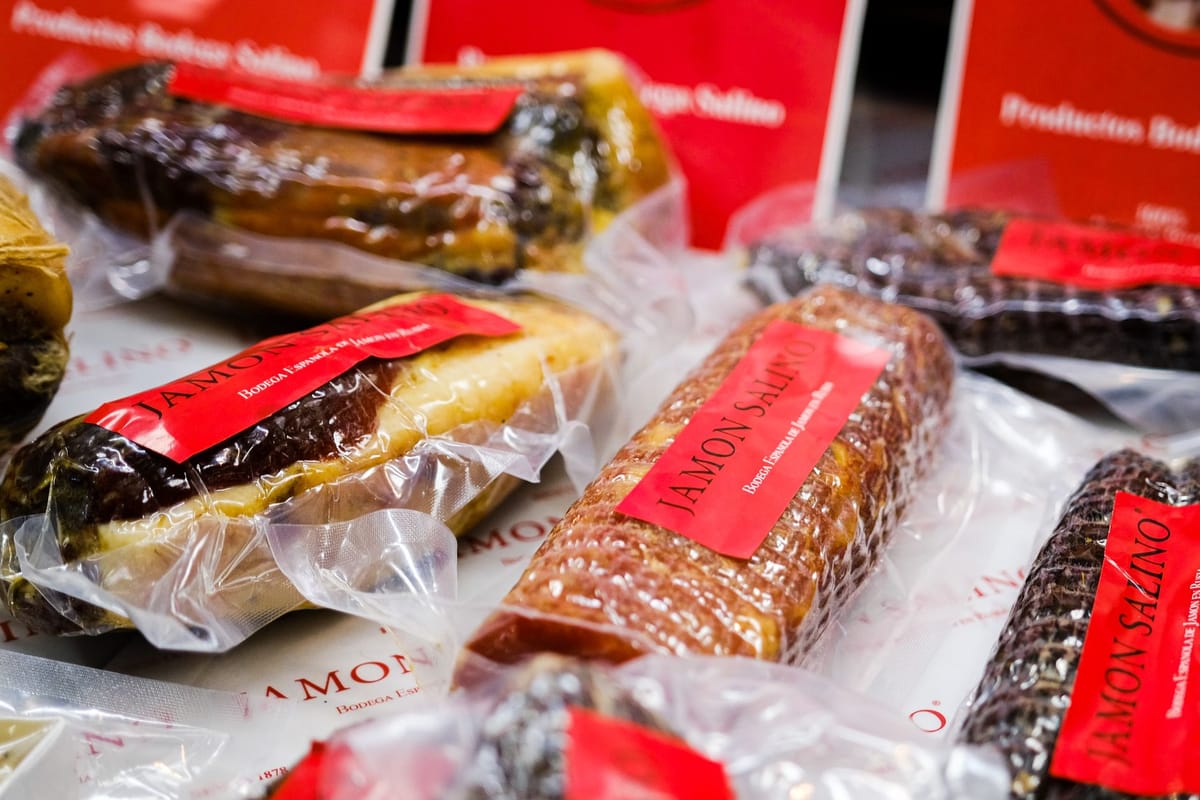
On the Costa Blanca, a food product is only legally protected if it carries a genuine European DOP or IGP seal: turron de Jijona, DO Alicante wine, Callosa d'en Sarria loquats (nisperos), Vinalopo table grapes or Alicante mountain cherries. These names are registered in Brussels and controlled by a Consejo Regulador (regulatory board). Words such as "artesano" (craft), "local" or "km 0" stuck on a label, on the other hand, carry no automatic legal weight: at best they rest on a separate document, the Documento de Calificacion Artesana (DCA) issued by the Valencian regional government. Here is how to tell the two apart on the shelf, without getting caught out.
DOP, IGP: what does the difference actually mean for your shopping?
A DOP (protected designation of origin) and an IGP (protected geographical indication) are two European quality schemes, governed since 3 January 2013 by Regulation (EU) No 1151/2012 (replaced from 2024 by Regulation (EU) 2024/1143), which legally protect a geographical name tied to a product. The difference lies in how strong the link to the territory has to be. For a DOP, according to the Spanish Ministry of Agriculture (MAPA), every stage of production must take place within the protected zone, and the product's qualities must be due, fundamentally or exclusively, to that territory (climate, soil, know-how). For an IGP, the link is looser: it is enough for a single stage, such as manufacturing or packaging, to take place within the protected zone. That explains a detail few people know, covered below for turron. On the packaging, look for the round European logo: red and yellow for a DOP, blue and yellow for an IGP. That logo is mandatory for any registered product, and it is a far more reliable marker than the product name on its own.
Which DOP/IGP labels genuinely exist in Alicante province?
Not every product marketed as "typical of Alicante" has European protection, far from it. Here are the ones that do, verified with MAPA and the Generalitat Valenciana as of 30 July 2026:
| Label | Product | Protected area | Since | What it guarantees |
|---|---|---|---|---|
| DO Alicante | Wine | The whole province, La Marina and Vinalopo sub-zones | Recognised in 1932, Consejo Regulador set up in 1957 | Approved grape varieties (notably Monastrell), yields, harvest zone |
| IGP Jijona and IGP Turron de Alicante | Turron (nougat) | Manufacturing and packaging in the single town of Jijona/Xixona | Spanish designation in 1940, European IGP in 1996 | Recipe (almond, honey, sugar, egg white), minimum almond percentage, place of manufacture |
| DOP Nisperos de Callosa d'en Sarria | Loquats | Callosa d'en Sarria and 18 towns of the Marina Baixa (Altea, Polop, La Nucia, Benidorm and others) | 1992 | Variety, harvest zone, size |
| DOP Uva de Mesa Embolsada del Vinalopo | Bagged table grapes | 7 towns of the Vinalopo (Agost, Monforte del Cid, Novelda, Aspe, Hondon de las Nieves, Hondon de los Frailes, La Romana) | Spanish DO in 1982, European IGP/DOP in 1996 | Varieties (Aledo, Ideal), hand-bagging technique, zone |
| IGP Cerezas de la Montana de Alicante | Cherries | North of the province (Vall de Gallinera, Planes, Ibi, Alcoy, Jijona, Muro de Alcoy, Villena and others) plus 2 neighbouring towns in Valencia province | IGP seal since 1991 | Varieties, altitude, production zone |
| DOP Arroz de Valencia | Rice | Mainly Valencia province; on the Alicante side, only the town of Pego (the Pego-Oliva marsh) is included | Ratified in Spain in 2001 | Variety, wetland growing area, method |
Two useful details for your shopping. Turron de Jijona and turron de Alicante have shared the same Consejo Regulador since 1996, with around twenty registered producers according to industry surveys (a figure stable over the last decade, with no more recent official update found with certainty for 2026). And the Vega Baja, despite its rice-growing tradition around the Segura river, has no DOP of its own: the nearest DOP geographically, Arroz de Calasparra, sits in the Murcia region (the towns of Calasparra and Moratalla) and in Albacete province, not in Alicante province.
Turron de Jijona, turron de Alicante: what does the label actually guarantee?
Two textures, two sets of specifications, one single authorised manufacturing town: Jijona/Xixona. Soft turron de Jijona must contain a minimum of 50 percent roasted almond under its specifications, a threshold that rises to 64 percent for the "Calidad Suprema" category. Hard turron de Alicante must also meet thresholds by category (around 46 percent for the Extra category, 60 percent for Suprema, according to industry sources). A lesser-known fact: because this is an IGP rather than a DOP, only the manufacturing and packaging stage has to take place in Jijona, so the specifications do not guarantee that the almonds or honey necessarily come from the province. What the label guarantees is the recipe, the proportions and the place of manufacture, not necessarily the origin of every ingredient. According to an estimate circulated by the industry (2017 data, published in 2019, the most precise we found), the Jijona turron sector was worth around 161 million euros a year at that point, of which around 58 million came from production under the IGP alone, the rest being "free" turron outside the protected designation. So check that the name "Jijona" or "Alicante" on your packet is followed by the blue and yellow IGP logo, not just the town's name printed in large letters.
What about wine and rice: what does the law actually say?
For wine, DO Alicante governs the grape varieties, yields and sub-zones (the coastal La Marina, the inland Vinalopo), with a worldwide exclusive on Fondillon, the naturally sweet wine found nowhere else. If a winery serves you that wine during a fine meal, you will find other serious tables in our selection of Michelin-starred dining on the Costa Blanca. For rice, the situation is simpler to remember: there is no DOP covering Alicante province as such. If you see rice sold as "arroz de Alicante" or "arroz del Segura" with no European logo, that is a commercial geographical reference, not a protected designation: nothing bans using it, but nothing controls it either. To find out where to eat rice that lives up to its promise on the Costa Blanca, our guide on where to eat real rice on the Costa Blanca remains the reference.
"Artesano", "local", "km 0": are these words protected by law?
No, not automatically. In Spain, there is no single, cross-cutting legal definition of the word "artesano" applied to food, unlike DOP or IGP, which are precise legal regimes. What does exist, in the Comunitat Valenciana, is the Documento de Calificacion Artesana (DCA), issued by the Centro de Artesania de la Comunitat Valenciana: a voluntary document, valid for four years before renewal, that a business or craftsperson must apply for and obtain in order to use a distinctive craft label, including for food products. In practice, a turron or cured-meat maker can be a genuine small family workshop that has never applied for this document, and conversely, nothing stops a large company from sticking the word "artesanal" on packaging with no precise legal basis, as long as it is not misleading under general consumer law. That is where a shopper's vigilance makes the difference: the word alone proves nothing, but the DOP/IGP seal, or an explicit DCA number, does. The same principle applies to other crafts in the province, such as Agost pottery: genuine craftsmanship is not proven by an adjective, but by a workshop you can visit and a producer you can name.
How do you check a label in the shop: the checklist
Before paying more for a product sold as "typical" or "craft", four habits are enough:
- Look for the round European logo: red and yellow for a DOP, blue and yellow for an IGP. If it is not there, the product is not protected, whatever name is written on it.
- Check the exact name of the designation, not just a town: "DO Alicante", "IGP Jijona" or "DOP Nisperos de Callosa d'en Sarria" must appear exactly as such, not "Alicante style" or "Jijona-type", wording that sidesteps the protection.
- Look at the manufacturer's or packer's name and address, mandatory on every label under the European consumer information regulation (INCO, 1169/2011): an address in Alicante province is a good sign of genuine proximity, even outside DOP/IGP.
- At a market stall or a small preserving business, you can ask whether the producer holds a Documento de Calificacion Artesana: a clear answer, backed by a number, is worth more than a generic "artesano" sticker.
Frequently asked questions about labelling and DOP/IGP in Alicante province
Is turron de Jijona necessarily made with local almonds?
Not necessarily. The IGP specifications protect the recipe and the place of manufacture (the town of Jijona/Xixona), not necessarily the origin of every ingredient: that is a feature of the IGP regime itself, more flexible than a DOP on this specific point.
Is there a DOP for Vega Baja rice?
No. The nearest rice DOP geographically, Calasparra, sits in the Murcia region and in Albacete province, not in Alicante province. DOP Arroz de Valencia only touches Alicante province marginally, through the town of Pego.
What does "artesano" on a label mean legally?
For food, the word has no single legal definition in Spain. In the Comunitat Valenciana, the only official recognition runs through the Documento de Calificacion Artesana (DCA) from the Centro de Artesania, a voluntary document the producer must have applied for and obtained.
How can you reliably spot a DOP or IGP product on the shelf?
Look for the round European logo (red and yellow for a DOP, blue and yellow for an IGP) alongside the exact name of the designation. Without that logo, the product may well be excellent, but it is not protected by law.
Sources: Spanish Ministry of Agriculture, Fisheries and Food (MAPA), DOP/IGP fact sheets consulted 30 July 2026; Generalitat Valenciana (agroambient.gva.es and portalagrari.gva.es) for the Consejos Reguladores; Consejo Regulador of the IGP Jijona and Turron de Alicante (jijona.com) for the specifications and almond percentages; Made in Jijona for the sector's economic figures (2017 data, published 2019); origenespana.es for the recognition dates of DOP Uva de Mesa Embolsada del Vinalopo and DOP Nisperos de Callosa d'en Sarria; BOE (Spain's official state gazette) for the ratification of DOP Arroz de Valencia; Centro de Artesania de la Comunitat Valenciana (centroartesaniacv.com and gva.es) for the Documento de Calificacion Artesana. European regulation: Regulations (EU) No 1151/2012 and (EU) 2024/1143. Some figures (the exact number of registered producers in 2026, the most recent economic data) could not be cross-checked against a dated official source, so we flag that rather than invent a number.
Information verified in August 2026. The Daily Costa Blanca is an AI-assisted publication with human review.
Le Livre blanc 2026 de l'expat
NIE, empadronamiento, fiscalité, école, logement : tout l'essentiel pour s'installer, réuni dans un guide PDF. Laisse ton e-mail, on te l'envoie.
🎉 Et voilà ! Ton Livre blanc 2026 de l'expat s'ouvre ici :
Ouvrir le Livre blanc 2026Dernière étape pour rejoindre l'aventure : confirme ton inscription dans l'e-mail qu'on vient de t'envoyer.
Réagis à cet article