
Why has the village of Agost shaped clay for 800 years?
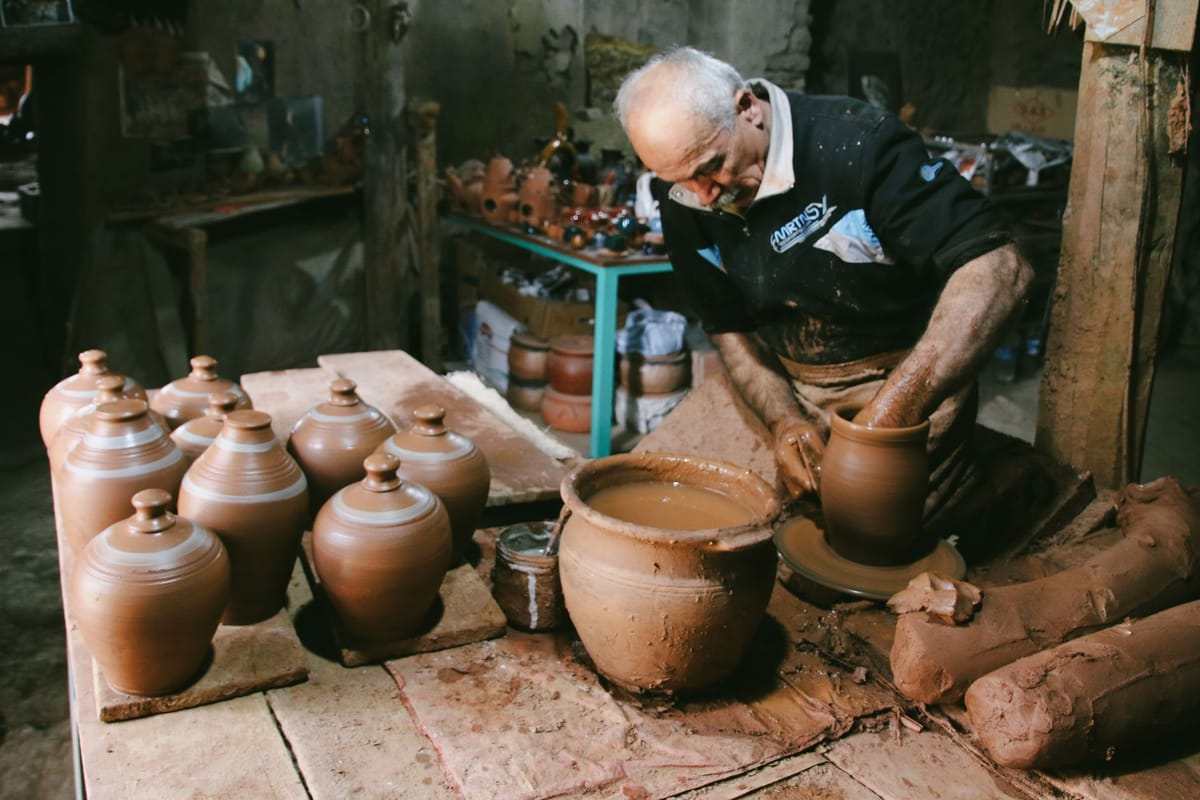
Agost, an inland village in Alicante province, about twenty minutes from the city and under an hour from the Costa Blanca beaches, has shaped clay for roughly 800 years because its subsoil yields a prized white limestone clay. The village turned that raw material into a speciality: jugs, jars and above all botijos (traditional water jugs), fired using techniques handed down through the generations. Here is the story of the craft, and where to see it up close today.
Where does Agost's pottery tradition come from?
From local clay and a kiln inherited from Arab tradition. Agost's traditional pottery stands out for the quality of its material, a pale limestone clay extracted locally, for its preparation techniques, and for firing in the "horno árabe" (Arab kiln), according to Agost's tourist office. The craft had its golden age in the 19th century, when the ceramics trade became the village's economic engine: more than twenty workshops were active at the time.
What is made in Agost?
White clay pieces designed for everyday use: cántaros (jugs), jarras (jars) and above all botijos, the great flagship of the village's traditional pottery. The botijo, a jug with a spout and a neck that keeps water cool through evaporation, remains the most emblematic piece of local craftsmanship. The tourist office describes the ceramic as ecological, reusable, durable and recyclable, long before those words became marketing buzzwords.
| Point | Detail |
|---|---|
| Age | pottery tradition documented for about 800 years |
| Raw material | pale limestone clay extracted locally |
| Firing technique | traditional kiln known as the "horno árabe" |
| Golden age | 19th century, more than 20 active workshops |
| Flagship piece | the botijo, a traditional water jug |
| Today | a handful of active artisan workshops, among the only ones in the whole Comunitat Valenciana still working using traditional methods |
Where can you see and buy this pottery today?
Two addresses to prioritise. The Museo de la Alfarería (pottery museum), housed in a former early-20th-century ceramics factory, traces every stage of clay processing, preparation and firing. To buy directly from the artisans, a handful of workshops remain active in Agost, including Tomás Román Beneyto, Cerámica Artística Pedro Molla and Cerámica Emili Boix, according to the local tourist office. The village also holds a Feria de la Artesanía (crafts fair) partly focused on ceramics, whose date varies from year to year: it is best to check the calendar with the town hall before visiting.
Frequently asked questions
Since when has pottery been made in Agost?
The village's pottery tradition is documented for about 800 years, built around a pale limestone clay extracted locally.
What is a botijo?
A traditional terracotta water jug, with a spout and a neck, that keeps water cool through evaporation. It is the most emblematic piece of Agost pottery.
Can you visit a potter's workshop in Agost?
Yes, several artisan workshops remain active, including Tomás Román Beneyto, Cerámica Artística Pedro Molla and Cerámica Emili Boix. The Museo de la Alfarería rounds out the visit.
Sources
Agost tourist office (turismodeagost.com, Artesanía and Museo de la Alfarería pages), Agost town council (agost.es), Comunitat Valenciana (regional tourism portal), consulted July 2026.
Information verified in July 2026. The Daily Costa Blanca is an AI-assisted publication with human editorial review and responsibility.
Le Livre blanc 2026 de l'expat
NIE, empadronamiento, fiscalité, école, logement : tout l'essentiel pour s'installer, réuni dans un guide PDF. Laisse ton e-mail, on te l'envoie.
🎉 Et voilà ! Ton Livre blanc 2026 de l'expat s'ouvre ici :
Ouvrir le Livre blanc 2026Dernière étape pour rejoindre l'aventure : confirme ton inscription dans l'e-mail qu'on vient de t'envoyer.
Réagis à cet article