
9 October and the Mocadorà: the Costa Blanca's regional day, decoded
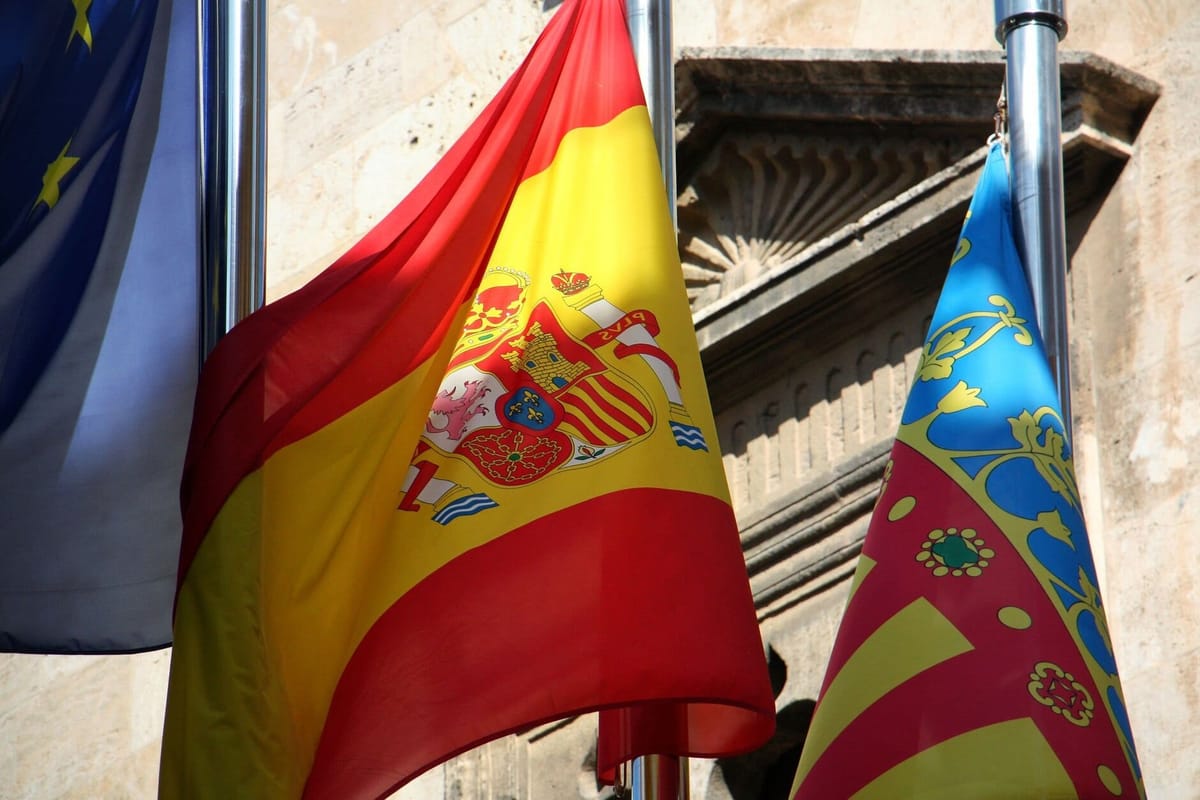
Yes: Friday 9 October 2026 is a public holiday across the Costa Blanca, in Alicante, Elche, Benidorm, Torrevieja, Dénia and every other town in the Valencian Community, under the Generalitat's Decreto 100/2025. It is Valencian Community Day (the 9 d'Octubre), which recalls King Jaume I's entry into the city of València on 9 October 1238. The main ceremony, the Real Senyera procession, takes place in València at 12:00 noon; in Alicante, the city has lined up a free afternoon of family entertainment from 4:30pm.
Updated on 4 October 2026. We have added the Alicante programme published so far. As of 4 October, Elche, Benidorm, Torrevieja and the other Costa Blanca towns had not published their own programmes, and no official information had been released on which shops and supermarkets will open or on traffic arrangements. We will add these as soon as the town halls publish them.
It catches newcomers out every autumn: on 9 October the shutters stay down, red-and-gold striped flags appear on balconies and pastry shop windows fill up with tiny fruits made of almond paste. Here is what actually happens on our side of the region, and what is worth the trip north.
Is 9 October 2026 a holiday in Alicante and on the Costa Blanca?
Yes. The holiday is not limited to the city of València: it covers the whole region, all three provinces, Alicante included. The legal reference is Decreto 100/2025, published in the regional gazette (DOGV no. 10145, 7 July 2025, CVE DOGV-C-2025-24690), which lists the twelve public holidays for 2026 in the Valencian Community.
Good news for your plans: Monday 12 October 2026, Spain's national day, is a holiday too. With the weekend in between, the Costa Blanca gets a four-day long weekend, from Friday 9 to Monday 12 October. If you have visitors flying in or friends in Murcia or Madrid, remember the 9th is an ordinary working day for them: it is not a national holiday.
- Friday 9 October: regional holiday (Valencian Community).
- Saturday 10 and Sunday 11: weekend.
- Monday 12 October: national holiday, all over Spain.
What does Valencian Community Day celebrate?
It goes back to 1238. On 9 October that year, King Jaume I of Aragon entered València, a few days after the surrender signed on 28 September by the emir Zayyan ibn Mardanish (eldiario.es; Wikipedia ES). That conquest is seen as the founding moment of the Kingdom of Valencia. In 2026 the anniversary carries extra weight: it is 750 years since Jaume I died, in 1276.
First proclaimed "Día Nacional del País Valenciano" in 1976, 9 October became the official Día de la Comunitat Valenciana with the 1982 Statute of Autonomy (Organic Law 5/1982, BOE-A-1982-17235). The calendar also makes it Sant Donís (Saint Denis), which Valencians turned into their lovers' day.
What's on in Alicante on 9 October 2026?
According to the programme reported by cbnoticias.com on 30 September 2026, Alicante is planning a free, family-friendly afternoon:
| Time | Event | Where |
|---|---|---|
| From 4:30pm | Circus workshops | Plaza de Argel |
| 5:30pm | Parade | Not specified in the source |
| 6:30pm | Show: "Tres Tristes Trolls" | Plaza de la Cruz |
That source did not detail any official morning events in Alicante as of 4 October: check alicante.es before you go.
What about Elche, Benidorm and Torrevieja?
As of 4 October 2026, Elche, Benidorm, Torrevieja and the other Costa Blanca towns had not published a 9 d'Octubre programme. Outside València, towns in the region such as Alicante, Elche and Castelló tend to hold smaller programmes (valencia.es; cbnoticias.com). Your best bet is the news or events page of your town hall's website, or its social media, during the week. We will add programmes here as they come out.
Should you go to Valencia to see the Senyera procession?
If you want the heart of the celebration, yes: the Processó Cívica with the Real Senyera, the mascletà and the Entrada de Moros y Cristianos only happen in the city of València. The key times published by the Ajuntament de València:
- Thursday 8 October, 11:30pm and 11:59pm: fireworks at the Pont de Montolivet.
- Friday 9 October, 12:00 noon: the procession leaves the Plaza del Ayuntamiento. The Senyera, the city's historic banner, is lowered from the balcony rather than carried out through the door, because it must not bow to anyone (valenciaextra.com; lenciclopedia.org), a rule attributed to a royal privilege from the 14th century.
- Friday 9 October, around 2pm: mascletà in the same square.
- Friday 9 October, 5pm: Entrada de Moros y Cristianos.
The full hour-by-hour programme, the procession route and our viewing tips are on our sister site: 9 October 2026 in Valencia: holiday, full schedule and the Mocadorà. If you are travelling up by train or coach, check your timetable, since it is a public holiday.
What is open on 9 October on the Costa Blanca?
On a regional holiday, public offices close and many shops either close or keep Sunday hours; pastry shops stay open (as observed in València by valenciaexpatdaily.com, 21 September 2026). As of 4 October 2026, no official list of open supermarkets or shops had been published, for Alicante or any other town. Do your shopping the day before or check your store's hours. We will fill in this section once the information is published.
What is a Mocadorà and where can you buy one on the coast?
The Mocadorà in a nutshell. For Sant Donís, you give the person you love a mocador, a square of fabric that is traditionally silk, tied into a bundle around marzipan miniatures: fruit and vegetables from the Valencian market gardens, plus two ritual pieces shaped like firecrackers, la piuleta and el tronador (visitvalencia.com).
It started out as a gift from a man to a woman; these days any couple swaps them. To find one, head to the forns and traditional pastry shops, which put them in the window in the days leading up to 9 October. Prices depend on the pastry shop, the size and the number of pieces. We do not have 2026 prices yet, so look around a few windows before you pick one.
Why are there marzipan firecrackers?
Folklore tells it as a cheeky workaround: in the 18th century, according to tradition, after the War of the Spanish Succession, Philip V is said to have banned the Sant Donís festivities and their firecrackers, so pastry makers recreated them in sugar and almond. Dates and details vary from one telling to another. As for the fruit and vegetables, a legend links them to the produce of the huerta offered to Queen Violant of Hungary, Jaume I's wife: a good story, without firm historical proof.
Why is Sant Donís the Valencian Valentine's Day?
Because Valencian tradition made 9 October, the feast of Saint Denis, its own Valentine's Day (visitvalencia.com; eldiario.es). So on the Costa Blanca, as in València, you get to celebrate love twice a year: on 14 February and on 9 October, Mocadorà in hand.
A few Valencian words for 9 October
Approximate pronunciation for English speakers, stressed syllable in capitals.
- Nou d'Octubre ("NOH-oo dok-TOO-breh"): 9 October.
- Senyera ("seh-NYEH-rah"): the Valencian flag; the Real Senyera is the historic banner of the city of València.
- Mocadorà or mocaorà ("moh-kah-doh-RAH"): the bundle of marzipan sweets given on Sant Donís.
- Piuleta ("pyoo-LEH-tah") and tronador ("troh-nah-DOR"): the two marzipan firecrackers.
- Processó Cívica ("pro-seh-SOH SEE-vee-kah"): València's civic procession.
- Mascletà ("mas-kleh-TAH"): a daytime concert of firecrackers.
- Visca! ("VEES-kah"): "Long live!".
To get to grips with the language you will see everywhere that day, read our piece on the Valencian language from a newcomer's point of view. For the rest of the week's plans, see the Costa Blanca agenda on our homepage.
Frequently asked questions about 9 October on the Costa Blanca
Is October 9 a holiday in Alicante?
Yes. Friday 9 October 2026 is a public holiday in Alicante and throughout the Valencian Community, under the Generalitat's Decreto 100/2025 (DOGV, 7 July 2025).
Is 9 October a holiday in Benidorm and Torrevieja?
Yes, like every town in the Valencian Community. Benidorm and Torrevieja, both in the province of Alicante, observe the regional holiday on 9 October 2026.
Is October 9 a holiday in all of Spain?
No. 9 October is a holiday only in the Valencian Community (the provinces of Alicante, Valencia and Castellón). Spain's national holiday in October is the 12th.
Is there a long weekend from 9 to 12 October 2026 on the Costa Blanca?
Yes. Friday 9 (regional holiday) and Monday 12 October (national holiday) are both days off in 2026: four days in a row, from 9 to 12 October.
What is on in Alicante on 9 October 2026?
According to cbnoticias.com (30 September 2026): circus workshops in Plaza de Argel from 4:30pm, a parade at 5:30pm and the show "Tres Tristes Trolls" at 6:30pm in Plaza de la Cruz, all free.
Where can you see the Real Senyera procession?
Only in the city of València: the Processó Cívica leaves the Plaza del Ayuntamiento at 12:00 noon on Friday 9 October 2026, according to the Ajuntament de València, followed by a mascletà at around 2pm.
Are supermarkets open on 9 October on the Costa Blanca?
As of 4 October 2026, no official list had been published. On a public holiday many shops close or open shorter hours: check your supermarket's hours or shop the day before.
What is a Mocadorà?
It is the lovers' gift of 9 October: a scarf tied around marzipan fruit, vegetables and two firecrackers (the piuleta and the tronador), sold in pastry shops in the days before.
Sources
Last updated: 4 October 2026.
- CB Noticias: all the 9 d'Octubre 2026 events (30 September 2026)
- DOGV no. 10145, 7 July 2025: Decreto 100/2025, 2026 public holidays
- Ajuntament de València: 9 d'Octubre 2026 programme
- BOE: Statute of Autonomy of the Valencian Community (1982)
- Visit València: the Sant Donís Mocadorà
- eldiario.es: the origin of the 9 d'Octubre
- Valencia Extra: the Real Senyera in 2026
- Wikipedia ES: Día de la Comunidad Valenciana
Information checked on 4 October 2026. Programmes, times and addresses change: always confirm with the official source before setting out. Checked by the editorial team. This article was prepared with the help of AI, then cross-checked, verified and edited by our newsroom, which takes editorial responsibility for it, in line with the EU AI Act. Spotted a mistake? Drop us a line and we will fix it. About us.
Le Livre blanc 2026 de l'expat
NIE, empadronamiento, fiscalité, école, logement : tout l'essentiel pour s'installer, réuni dans un guide PDF. Laisse ton e-mail, on te l'envoie.
🎉 Et voilà ! Ton Livre blanc 2026 de l'expat s'ouvre ici :
Ouvrir le Livre blanc 2026Dernière étape pour rejoindre l'aventure : confirme ton inscription dans l'e-mail qu'on vient de t'envoyer.
Réagis à cet article