
Valencian: the Costa Blanca's other language, a newcomer's view
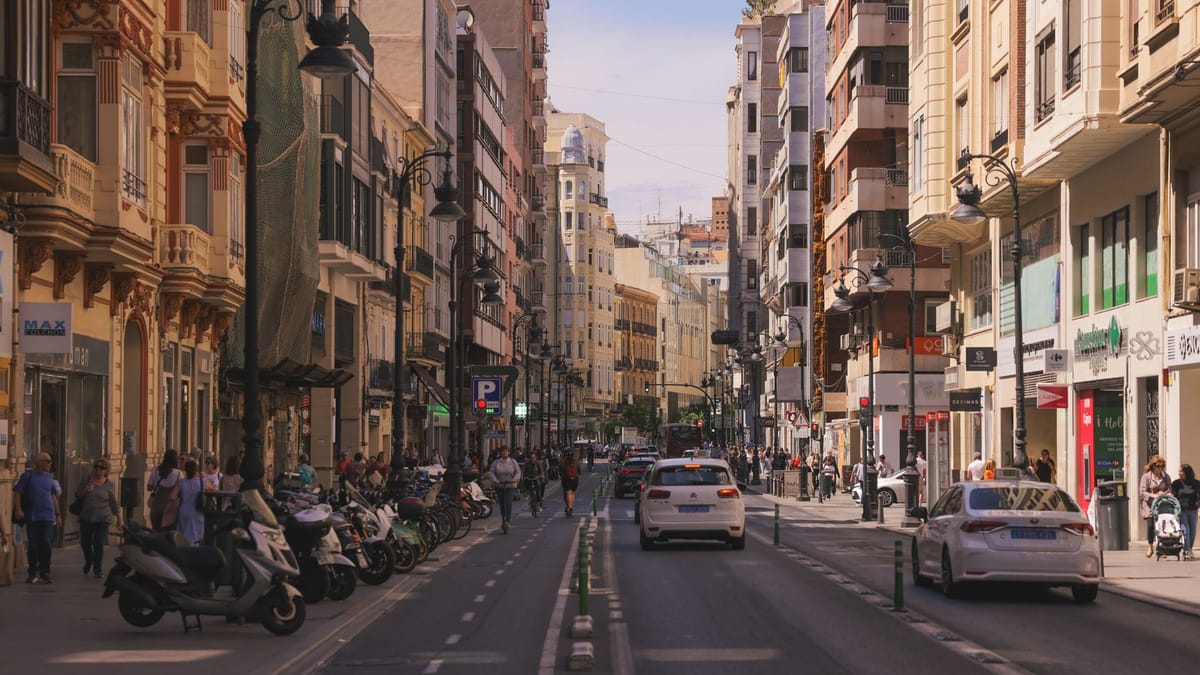
You arrive with your schoolroom Spanish and a comfortable certainty: you'll muddle through. And then you discover that on the Costa Blanca there isn't one language, but two. Welcome to the linguistic deep end.
Valencian, the language of this place
Alongside Castilian (the Spanish you learned, more or less), there's Valencian, the co-official language of the region the Costa Blanca belongs to, the Valencian Community (which includes the province of Alicante). And you'll see it: on the signs, in the street names (Carrer for street, Plaça for square, Platja for beach), at school, at the town hall. It isn't a dialect or an accent or "broken Spanish" - it's a full language in its own right, closely related to Catalan.
How much you actually hear it depends a lot on where you land. It's very much alive in the Marina Alta, around Dénia, Xàbia (Jávea) and Calpe and the inland villages, where many people switch between the two languages without thinking. It fades in Alicante city and, above all, in the southern Vega Baja (Orihuela, Torrevieja), historically Castilian-speaking, where you'll rarely need it. Nobody expects you to speak it, but knowing a few words saves you hunting for the "exit" on a sign that only reads eixida. The newcomer who thought they only had to brush up their Spanish is briefly floored, then charmed: this, too, is what makes the place itself.
The false friends that catch you out
Spanish is close enough to English in places to lull you, then trip you up. A handful of words look familiar and mean something else entirely. Embarazada does not mean embarrassed - it means pregnant, which is a memorable mistake to make out loud. Constipado means you have a cold, not what you might fear. Largo means long, not large. Sensible means sensitive, not sensible. Éxito is a success, not an exit. You trip over one of these once, in public, you laugh, and you remember it for life.
The pidgin you cobble together
While your Spanish catches up, you improvise. You stick an -o on the end of English words and hope, you gesture, you fill the gaps with your hands and a hopeful smile. It isn't elegant, but it works: communication runs on context, goodwill and a mutual patience that genuinely warms the heart. Nobody is grading you.
And one day, it just clicks
The loveliest part is that, through sheer accumulation of bars, bureaucracy and chatty neighbours, Spanish gets in through your ears without you noticing. One morning you drop a perfectly natural vale (OK), you say hasta luego to the baker, and you realise you've arrived. Not bilingual, no. But at home. And if your children go to school here, they'll pick up Valencian fast - it's taught in state schools, and they often end up trilingual without even trying.
Sources
Le Livre blanc 2026 de l'expat
NIE, empadronamiento, fiscalité, école, logement : tout l'essentiel pour s'installer, réuni dans un guide PDF. Laisse ton e-mail, on te l'envoie.
🎉 Et voilà ! Ton Livre blanc 2026 de l'expat s'ouvre ici :
Ouvrir le Livre blanc 2026Dernière étape pour rejoindre l'aventure : confirme ton inscription dans l'e-mail qu'on vient de t'envoyer.
Réagis à cet article