
Estadio Rico Pérez: the Alicante stadium where Maradona once played
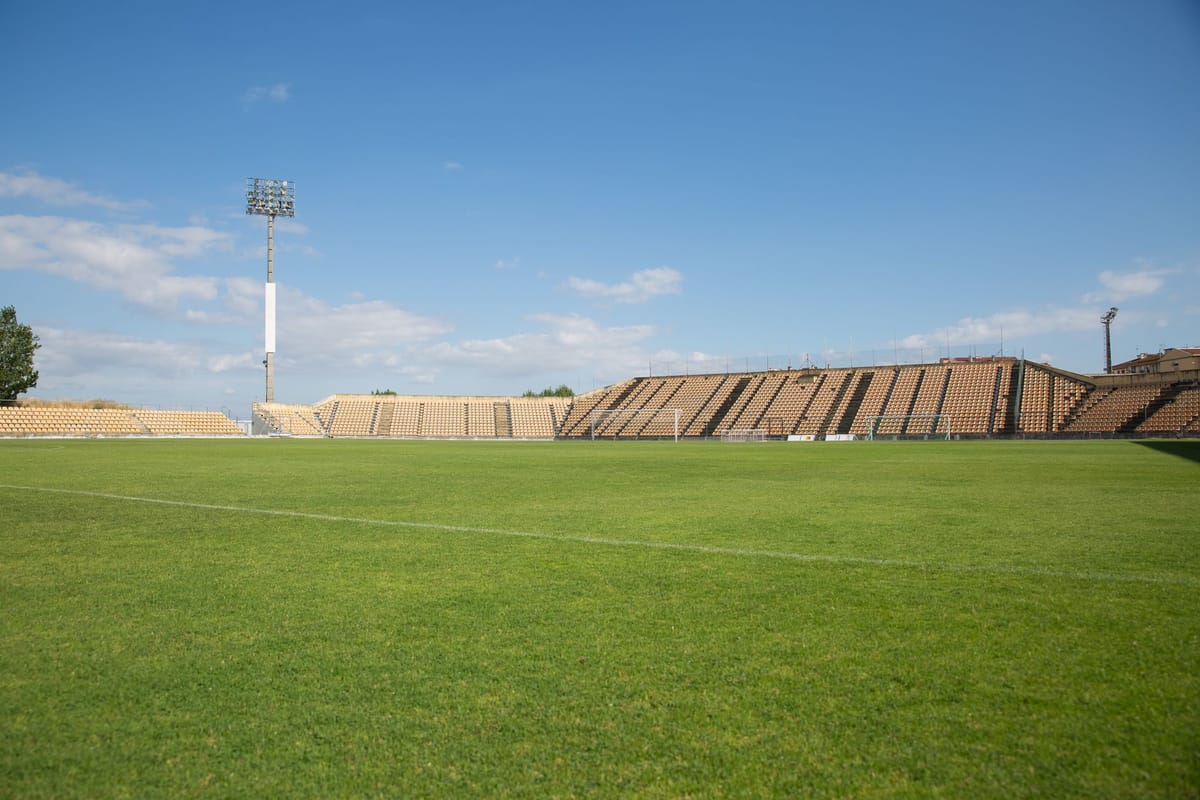
Yes, Diego Maradona really did play in Alicante. The Estadio José Rico Pérez, home of Hércules CF, hosted three matches at the 1982 World Cup, two of them featuring Argentina and a young Maradona. The ground opened on 3 August 1974, and today the club plays in Spain's third division. There is no LaLiga side here and no grand new-stadium project, but there is a genuine slice of Spanish football history: a short golden age, and a summer in 1982 that the stands still remember.
Did Maradona really play at the Rico Pérez?
He did, at the 1982 World Cup. In June and July 1982, the tournament hosted by Spain came to Alicante, and Argentina, the defending champions, played two first-round matches at the Rico Pérez. Diego Armando Maradona, then 21, was taking part in his first World Cup. In all, the stadium staged three matches during the tournament, including the third-place play-off.
| Date | Match | Score | Attendance |
|---|---|---|---|
| 18 June 1982 | Argentina vs Hungary | 4-1 | 32,093 |
| 23 June 1982 | Argentina vs El Salvador | 2-0 | - |
| 10 July 1982 | Poland vs France (third-place match) | 3-2 | approx. 32,500 |
To host these games, the stadium was enlarged: a new upper stand was built just before the World Cup. It came at a heavy cost and left the club with debt that weighed on it for years. In other words, the ground's finest hour also marked the end of its golden age.
When did the Rico Pérez open, and against whom?
The Rico Pérez opened on 3 August 1974, and it did so in style. For its inaugural match, Hércules CF welcomed an FC Barcelona side featuring Johan Cruyff. Hércules lost 0-4, with goals from Rexach, Asensi, Cruyff himself and Pérez. The new ground replaced the old La Viña stadium, which had grown too small for the club's ambitions. It is named after José Rico Pérez (1918-2010), a former Hércules CF president who championed its construction. Sources spell the architect's name differently, so we prefer not to name one with false certainty.
What was the stadium's golden age?
The ground was born on the way up. From its opening in 1974, Hércules put together eight consecutive seasons in Primera División, Spain's top flight. Across the stadium's entire history, the club has totalled twelve seasons in Primera, still its calling card. Its most recent promotion to the top tier came in 2010, for a single season. The turning point was the late 1970s and early 1980s: the 1982 World Cup expansion left heavy debt, and the club never truly recovered the stability of those early seasons. Since then, Hércules has spent most of its time in the lower divisions, with the occasional brief promotion.
How many people does the Rico Pérez hold today?
Honestly, the sources disagree. Depending on the document and the period, capacity figures range from about 24,700 to nearly 33,500 seats. Most estimates land somewhere between roughly 25,000 and 29,000, varying by era and by renovation work, with no single agreed figure. What is certain is that the stadium has never again matched the crowds of its opening match or of that summer in 1982.
Who owns the Rico Pérez now?
The stadium is now publicly owned. Hércules CF owned its ground until the early 1990s, before it passed to Alicante city council. After that, things got complicated.
| Year | What happened |
|---|---|
| 2007 | Bought by the company Aligestión (Enrique Ortiz) |
| 2010 | An 18 million euro loan from CAM (a savings bank), guaranteed by the Instituto Valenciano de Finanzas (IVF) under the previous PP regional government |
| 2017 | Aligestión went bankrupt; the stadium was auctioned and bought by the Generalitat Valenciana, via the IVF, for 3.7 million euros (estimated value over 13 million euros) |
Today the owner is public: the Generalitat Valenciana, through the IVF. The club is a tenant in its own stadium, a common enough situation in Spain, but one that complicates any major renovation plan.
What division is Hércules in, and what is next for the ground?
Hércules plays in Primera Federación, Spain's third division, in group 2 (East-South) for the 2025-26 season, confirmed at the end of June 2025. The groupings for 2026-27 are not yet known, so it would be guesswork to name them. On the stadium side, the club and the IVF, its owner, agreed on emergency works ahead of the 2025-26 season. Both sides accept that a wider renovation would be needed, a long-standing demand from supporters, but no timeline or budget for a major project has been made public to date. In short, do not expect a brand-new "Rico Pérez 2.0": that project does not exist in reality, unlike some other stadiums in the region.
Frequently asked questions
Did Maradona really play in Alicante?
Yes. The Estadio Rico Pérez hosted two Argentina matches at the 1982 World Cup, against Hungary on 18 June and El Salvador on 23 June. Diego Maradona, then 21, played his first World Cup there.
When was the stadium opened?
On 3 August 1974, with a match against Johan Cruyff's FC Barcelona, which Hércules CF lost 0-4. It replaced the old La Viña stadium, which had become too small.
What division does Hércules CF play in today?
Primera Federación, Spain's third division, in group 2 for the 2025-26 season. Across the stadium's history, the club has had twelve seasons in Primera División, the most recent in 2010.
Sources
The facts above were cross-checked and rewritten (never copied) from encyclopedic entries on the Estadio José Rico Pérez, Hércules CF and the 1982 World Cup, the official Hércules CF website, and Spanish press (Alicante and Comunitat Valenciana sports and regional coverage) for the ownership history, the 2017 IVF takeover and the 2025-26 sporting situation. Consulted in July 2026.
Information verified in July 2026. The Daily Costa Blanca is an AI-assisted publication with human editorial review and responsibility.
Le Livre blanc 2026 de l'expat
NIE, empadronamiento, fiscalité, école, logement : tout l'essentiel pour s'installer, réuni dans un guide PDF. Laisse ton e-mail, on te l'envoie.
🎉 Et voilà ! Ton Livre blanc 2026 de l'expat s'ouvre ici :
Ouvrir le Livre blanc 2026Dernière étape pour rejoindre l'aventure : confirme ton inscription dans l'e-mail qu'on vient de t'envoyer.
Réagis à cet article