
Museums and street art on the Costa Blanca: what should you know, from the MACA to Sempere?
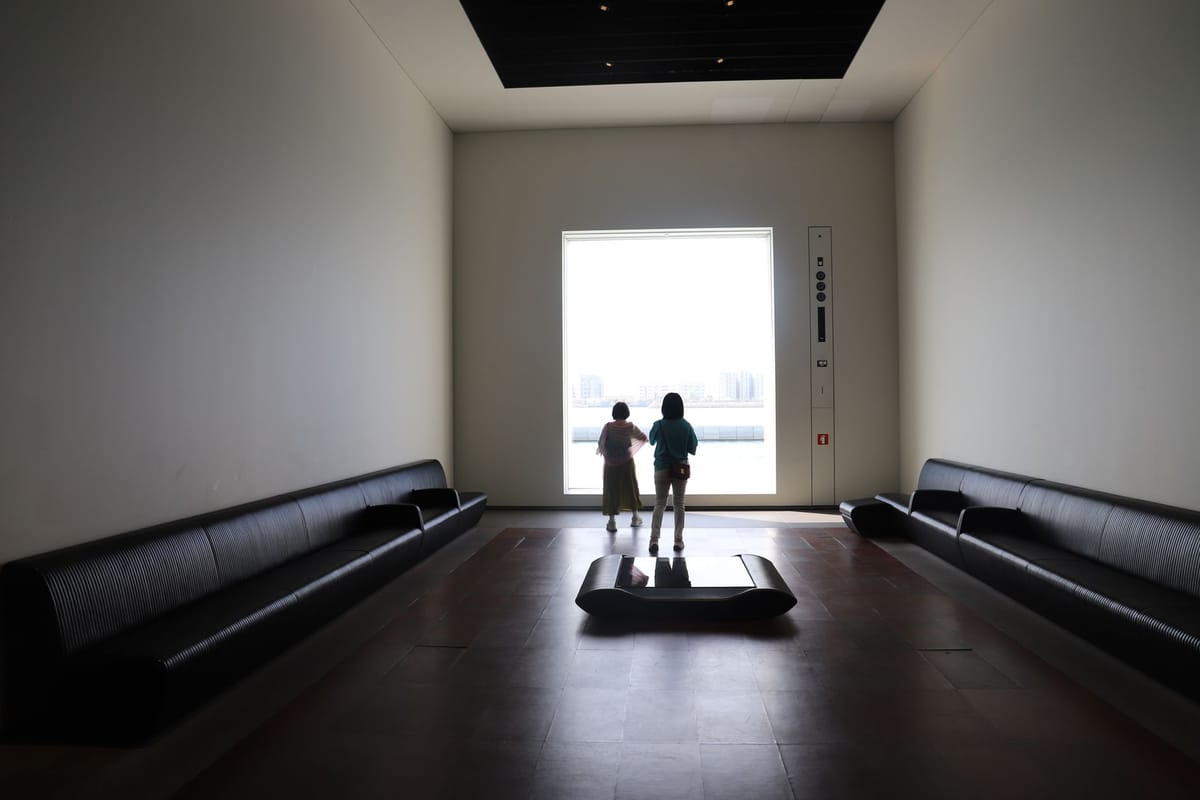
On the Costa Blanca, art is experienced first in museums, not in the street. Alicante leans on two solid, complementary institutions, born largely from a local painter rather than a grand public plan: the MACA, dedicated to 20th-century and contemporary art, and the MUBAG, devoted to old Alicante painting. On the street art side, let's be honest: the scene exists but stays emerging, carried by occasional private or grassroots initiatives, with no museum quarter or major street festival to match what you find elsewhere.
Who is the Costa Blanca's great painter?
The most solid figure is Eusebio Sempere, born in Onil, in Alicante province, on 3 April 1923 and died on 10 April 1985. Trained at the San Carlos Fine Arts School in Valencia, he spent a long spell in Paris between 1948 and 1960, where he turned to kinetic art, then joined the second stage of the Grupo Parpalló on his return. His recognition peaked with the Prince of Asturias Award for the Arts in 1983. He, more than anyone, embodies 20th-century Alicante painting: if you remember only one name, make it his. And his role does not stop at his own work, as you will see: he is also the one who set the city's first contemporary art museum in motion.
Why does the MACA exist thanks to an artist?
Because the Museo de Arte Contemporáneo de Alicante was not born from an institutional commission, but from a donation. Between 1976 and 1978, Eusebio Sempere gathered and gave his city the first core of 20th-century works that would found the museum. The MACA opened on 5 November 1977 in the Casa de la Asegurada, a Baroque civic building from 1685 (a former grain store) that stands opposite the Santa María church, right in the historic centre. That is a fundamental difference from a typical public museum: here, the starting point is a local artist's own eye. After a renovation led by architect Sol Madridejos, the museum reopened in March 2011.
The collection holds its own. The "20th-century Art" holdings bring together 177 works by 114 artists, with names such as Picasso, Miró, Dalí, Juan Gris, Kandinsky and Julio González. Added to that is the Eusebio Sempere collection, 513 pieces strong (the most complete public collection of his work), and the bequest of Juana Francés, an artist of the El Paso group who died in 1990, comprising 134 works. Since 1998, the museum has run three rotating permanent exhibitions built around geometry, abstraction and figuration.
What is the MUBAG, and what can you see there?
The Museo de Bellas Artes Gravina, opened in 2001, is the other pillar, focused on old painting. It occupies the Palacio del Conde de Lumiares, a palace built between 1748 and 1808 and a listed monument. It holds Alicante painting and sculpture from the 16th to the early 20th century, drawing on the Diputación de Alicante's holdings, which run to more than 3,000 pieces. You will come across Joaquín Agrasot, Emilio Sala, Antonio Gisbert and Emilio Varela.
The museum also holds a nice surprise: a Sorolla room, fed by loans from the Prado museum and the Sorolla museum in Madrid, open permanently since 2012 with more than 60 works. In 2024, the MUBAG also received a family donation of 115 works by Lorenzo Aguirre.
| Museum | For what | Building |
|---|---|---|
| MACA | 20th-century and contemporary art (Picasso, Miró, Dalí, Sempere) | Casa de la Asegurada, civic Baroque, 1685 |
| MUBAG | Old Alicante painting (16th to early 20th century) and the Sorolla room | Palacio del Conde de Lumiares, 1748-1808 |
Is there really a street art scene in Alicante?
Yes, but let's stay honest: it is emerging, not thriving. There is no neighbourhood entirely dedicated to urban art here, nor a confirmed major street festival on the scale of those found in other Spanish cities. The collaborative platform Street Art Cities lists around twenty catalogued works in the city of Alicante, spread across several districts, including Juan XXIII, with names such as Doble13, Felix Gordero, Hunter87, Salvador Gómez, Aguabella and Manuel Galdón. Note: this is a contributor-fed database, not an official council inventory. The figure gives you an order of magnitude, not an exhaustive count.
In other words, do not come to Alicante expecting an open-air museum. Come for the good museums, and treat painted walls as a bonus to hunt for along the way.
What is the "El Alma del Muro" competition?
It is the perfect example of what Alicante street art looks like today: a private, one-off initiative, not a city policy. This competition is organised by an Alicante restaurant, Tribeca, running over 2025-2026. Entries opened on 16 October 2025, live painting is scheduled for 18 and 19 May 2026, and the result is due on 29 June 2026. Five finalist artists are in the running: Iñigo Lanz, Javier SEUS, Alberto Durante, Felisa Padilla and Johnier Tattoo. Two works will become permanent after a public vote. A nice initiative, but keep in mind that it is run by a private business, not a municipal festival.
- 16 October 2025: entries open.
- 18 and 19 May 2026: finalists' live painting.
- 29 June 2026: result announced.
- Finalists: Iñigo Lanz, Javier SEUS, Alberto Durante, Felisa Padilla, Johnier Tattoo.
- At stake: two permanent walls, chosen by public vote.
How should you plan an art visit on the Costa Blanca?
The simplest approach is to focus on Alicante's historic centre, where the MACA and MUBAG sit close to each other. Start with the MACA for the 20th century and Sempere's founding gesture, follow with the MUBAG to go further back in time to the Sorolla room, then let your eyes wander over the facades around neighbourhoods such as Juan XXIII if you fancy a hunt for painted walls.
In brief
- The great painter: Eusebio Sempere (Onil, 1923-1985), kinetic art, Prince of Asturias Award 1983.
- The contemporary art museum: the MACA, born from a Sempere donation, opened in 1977, with Picasso, Miró, Dalí and Kandinsky.
- The old painting museum: the MUBAG, opened in 2001, Alicante painting from the 16th to 20th century and the Sorolla room.
- Street art: an emerging scene, around twenty works recorded on a collaborative basis, no museum quarter or confirmed major street festival.
- To watch: the private "El Alma del Muro" competition, live painting on 18-19 May 2026.
Frequently asked questions
Which art museums should you see in Alicante?
Two above all: the MACA (Museo de Arte Contemporáneo de Alicante), for 20th-century and contemporary art, and the MUBAG (Museo de Bellas Artes Gravina), for old Alicante painting and a Sorolla room. Both are in the historic centre, a short distance apart.
Who is Eusebio Sempere?
The most important 20th-century Alicante painter, born in Onil in 1923 and died in 1985, a kinetic art specialist and winner of the Prince of Asturias Award for the Arts in 1983. His donation, between 1976 and 1978, founded the MACA.
Can you see Sorolla paintings on the Costa Blanca?
Yes. The MUBAG has run a Sorolla room since 2012, with more than 60 works on loan from the Prado museum and the Sorolla museum in Madrid.
Is there a street art festival on the Costa Blanca?
No confirmed major street festival to date, unlike some other Spanish regions. Alicante's urban art scene remains emerging and mostly rests on occasional private or grassroots initiatives, such as the "El Alma del Muro" competition launched by a city restaurant.
Sources
Wikipedia ES and alicante.es, Alicante city council (MACA, Casa de la Asegurada, collections); Wikipedia ES and Consorci de Museus de la Comunitat Valenciana (MUBAG, Sorolla room, Lorenzo Aguirre donation); Museo Reina Sofía, the Prado museum and the Fundación Princesa de Asturias (Eusebio Sempere); Street Art Cities, collaborative database (works recorded in Alicante); announcements of the "El Alma del Muro" competition, Tribeca restaurant (calendar and finalists). Facts cross-checked and rewritten, never copied. Consulted July 2026.
Information verified in July 2026. The Daily Costa Blanca is an AI-assisted publication with human editorial review and responsibility. Collections, exhibitions, painted walls and programming can change, and street art is by nature ephemeral: check with museums and organisers before visiting.
Le Livre blanc 2026 de l'expat
NIE, empadronamiento, fiscalité, école, logement : tout l'essentiel pour s'installer, réuni dans un guide PDF. Laisse ton e-mail, on te l'envoie.
🎉 Et voilà ! Ton Livre blanc 2026 de l'expat s'ouvre ici :
Ouvrir le Livre blanc 2026Dernière étape pour rejoindre l'aventure : confirme ton inscription dans l'e-mail qu'on vient de t'envoyer.
Réagis à cet article