
The Misteri d'Elx and theatre on the Costa Blanca: what you need to know
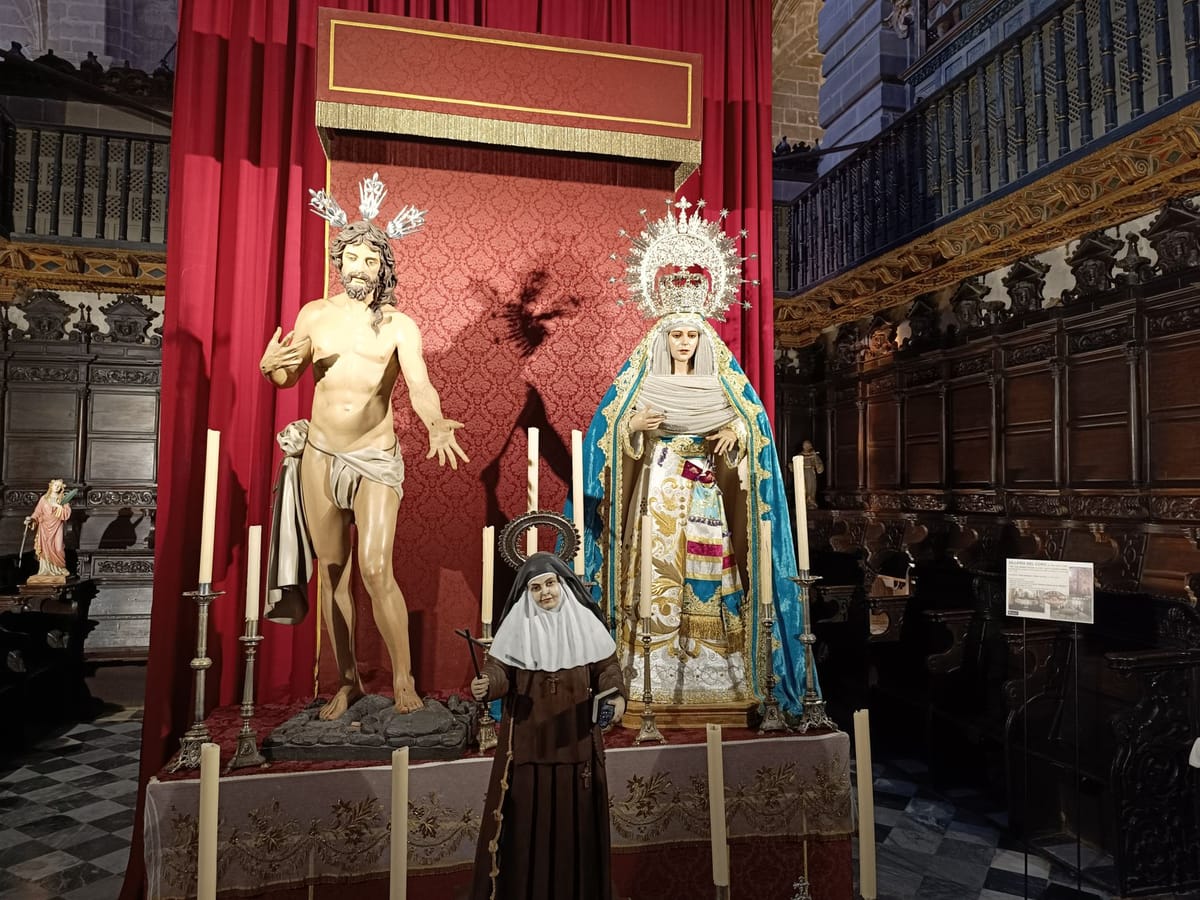
On the Costa Blanca, the most important piece of theatre isn't something you drop in on like a regular venue: you catch it once a year, in Elche, inside the nave of the Santa María basilica. It's the Misteri d'Elx, a sacred drama sung a cappella, performed without a break for more than five centuries, and proclaimed in Paris on 18 May 2001 a Masterpiece of the Oral and Intangible Heritage of Humanity by UNESCO (the first Spanish festivity to earn the distinction, according to the Ministerio de Cultura y Deporte and Elche city council). Around this centrepiece, the province also keeps real, working stages, the Teatro Principal in Alicante and the Teatro Chapí in Villena, plus a handful of festivals that keep the scene alive the rest of the year.
What is the Misteri d'Elx?
It's a medieval liturgical drama, entirely sung, that tells of the death, Assumption and coronation of the Virgin Mary. Its origin most likely dates to the second half of the 15th century. The original manuscript is lost: the earliest reference to a libretto dates from 1625, and the copy kept in Elche's municipal archives was transcribed in 1709 by the Beneficiado Joseph Lozano y Rois (sources: blogs.ua.es, Wikipedia ES). The text is almost entirely in old Valencian, apart from a few lines in Latin.
What makes it unique is in the detail. Everything is sung a cappella: Gregorian chant, Spanish Renaissance polyphony and Baroque pieces, with the organ used only to set the pitch. The most spectacular moment is the Araceli, a mechanical cloud that descends from the dome carrying two angels, gathers the Virgin's soul and lifts it to Paradise, all on a manual pulley system. Every role, including the female ones, is played by men, a legacy of medieval liturgical prohibition. The result is one of the last survivals of pre-Council-of-Trent liturgical theatre still performed at its place of origin (sources: elchesemueve.com, orbehispanico.es, National Geographic Historia ES).
When does the Misteri d'Elx take place in 2026?
The performance runs in two parts, both at the Santa María basilica in Elche. The Vespra, the first part, devoted to the death and Assumption of the Virgin, is performed on 14 August 2026 at 6pm. The Festa, the second part, with the coronation of the Virgin, takes place on 15 August 2026 at 6pm. Entry is free on both days, but the basilica's capacity is limited: arrive several hours early to stand a chance of a place. Paid general rehearsals are held on 11, 12 and 13 August.
| 2026 date | What's performed | Access |
|---|---|---|
| 11, 12 and 13 August | General rehearsals | Paid (tickets) |
| 14 August, 6pm | La Vespra (death and Assumption of the Virgin) | Free, limited capacity |
| 15 August, 6pm | La Festa (coronation of the Virgin) | Free, limited capacity |
The Santa María basilica sits in the heart of Elche's old town, between the listed Palmeral and the historic centre.
How do you attend the Misteri d'Elx, and what do tickets cost?
You have two options. For 14 and 15 August, entry is free but the basilica's seats fill fast: it's best to arrive well before 6pm. For the general rehearsals on 11, 12 and 13 August, you need a ticket. Ticket sales open from 13 July, via the official Misteri d'Elx website, El Corte Inglés and the Casa de la Festa box office (calle Major de la Vila 27, Elche). The prices below are reference prices recorded in 2025 (sources: Alicante Plaza, taquilla.com, versionradio.es) and may be adjusted from year to year: always check with the official box office before buying.
| Location | 2025 reference price |
|---|---|
| Nave | 50 euros |
| Balcón (standing) | 30 euros |
| Crucero | 30 euros |
| Corredor-balcón | 20 euros |
| Corredor-balcón puerta mayor | 10 euros |
Elche is worth a full day: the Palmeral, Europe's largest palm grove, is right next door.
Where can you see classical theatre on the Costa Blanca?
In two heritage venues that are still active. The Teatro Principal in Alicante is the province's flagship stage: its construction was decided on 23 September 1845, to designs by the architect Emilio Jover Pierrón in a neoclassical style, and it opened on 25 September 1847. Partly destroyed by a bombing raid on 28 February 1939, it was restored between 1939 and 1941, then renovated from 1985 to 1992. It now seats around 960, on the Plaza de Ruperto Chapí, and lists its programme online for 2025 to 2027 (teatroprincipaldealicante.com).
Inland, the Teatro Chapí in Villena is named after the Villena-born composer Ruperto Chapí (1851 to 1909), who wrote zarzuelas such as La Revoltosa. The theatre traces back to 1885, but the current building opened in 1925. It remains active, with a 2026 programme already online.
| Venue | Key facts | Where |
|---|---|---|
| Teatro Principal | Neoclassical, decided 1845, opened 1847, around 960 seats | Alicante |
| Teatro Chapí | Named after Ruperto Chapí, origin 1885, current building from 1925 | Villena |
And for live theatre, which festivals should you follow?
The scene isn't limited to heritage venues. Every summer, the Festival de Teatro Clásico de L'Alcúdia, run by the University of Alicante, stages classical open-air theatre at the L'Alcúdia archaeological site in Elche: its 14th edition runs from 1 to 10 July 2026. In Sant Joan d'Alacant, the Petit Teatre children's programme is in its 10th edition, one Sunday a month from 5 October 2025 to 14 June 2026. Finally, the Casa Mediterráneo, in Alicante, has announced the 6th edition of its FRESCA! festival for 2026 (exact dates not yet confirmed at the time of writing).
- Festival de Teatro Clásico de L'Alcúdia (14th edition): open-air classical theatre at the L'Alcúdia archaeological site, Elche, 1 to 10 July 2026 (University of Alicante).
- Petit Teatre (10th edition): children's programme, one Sunday a month, 5 October 2025 to 14 June 2026, in Sant Joan d'Alacant.
- FRESCA! (6th edition): at the Casa Mediterráneo, Alicante, announced for 2026, dates to be confirmed.
In brief
- The Misteri d'Elx is the centrepiece: a sacred drama sung a cappella, UNESCO-listed on 18 May 2001, performed for more than 500 years at the Santa María basilica in Elche.
- In 2026: La Vespra on 14 August at 6pm, La Festa on 15 August at 6pm, free entry but limited capacity; paid rehearsals on 11, 12 and 13 August.
- Two heritage venues: the Teatro Principal in Alicante (opened 1847) and the Teatro Chapí in Villena (1925 building).
- A still-living scene: the Festival de Teatro Clásico de L'Alcúdia, the Petit Teatre programme and the FRESCA! festival.
FAQ
Is the Misteri d'Elx free?
On 14 and 15 August, the performance at the Santa María basilica is free entry, but capacity is limited: arrive several hours early. The general rehearsals on 11, 12 and 13 August are paid, with tickets available via the official website, El Corte Inglés or the Casa de la Festa (calle Major de la Vila 27).
What language is the Misteri d'Elx performed in?
Almost entirely in old Valencian, with a few lines in Latin. Everything is sung a cappella, to melodies from Gregorian chant, the Spanish Renaissance and the Baroque era, with the organ used only to set the pitch.
Why are all the roles played by men?
It's a legacy of the medieval liturgical prohibition that excluded women from religious theatre. The Misteri has kept this rule, including for female roles such as the Virgin, which makes it one of the last survivals of pre-Council-of-Trent liturgical theatre still performed at its place of origin.
Where can you see theatre the rest of the year on the Costa Blanca?
At the Teatro Principal in Alicante and the Teatro Chapí in Villena, both active with programmes online. In summer, the Festival de Teatro Clásico de L'Alcúdia performs open-air in Elche (1 to 10 July 2026), and Sant Joan d'Alacant offers a children's programme, Petit Teatre.
Sources
Ministerio de Cultura y Deporte and Elche city council (UNESCO listing, 18 May 2001); blogs.ua.es and Wikipedia ES (origin, manuscript, 1709 transcription, language); elchesemueve.com, orbehispanico.es and National Geographic Historia ES (a cappella, the Araceli, all-male cast, age); official Misteri d'Elx website (2026 dates and tickets); Alicante Plaza, taquilla.com and versionradio.es (2025 reference prices); teatroprincipaldealicante.com (Teatro Principal in Alicante); Teatro Chapí de Villena documentation; University of Alicante (Festival de Teatro Clásico de L'Alcúdia); Casa Mediterráneo and Sant Joan d'Alacant council (FRESCA!, Petit Teatre). Facts cross-checked and rewritten, never copied.
Information verified in July 2026. The Daily Costa Blanca is an AI-assisted publication with human editorial review and responsibility. Dates, prices and programmes can change: check with box offices and organisers before travelling.
Le Livre blanc 2026 de l'expat
NIE, empadronamiento, fiscalité, école, logement : tout l'essentiel pour s'installer, réuni dans un guide PDF. Laisse ton e-mail, on te l'envoie.
🎉 Et voilà ! Ton Livre blanc 2026 de l'expat s'ouvre ici :
Ouvrir le Livre blanc 2026Dernière étape pour rejoindre l'aventure : confirme ton inscription dans l'e-mail qu'on vient de t'envoyer.
Réagis à cet article