
Living LGBTQIA+ in Valencia: a survey of a city that reassures (almost) everywhere
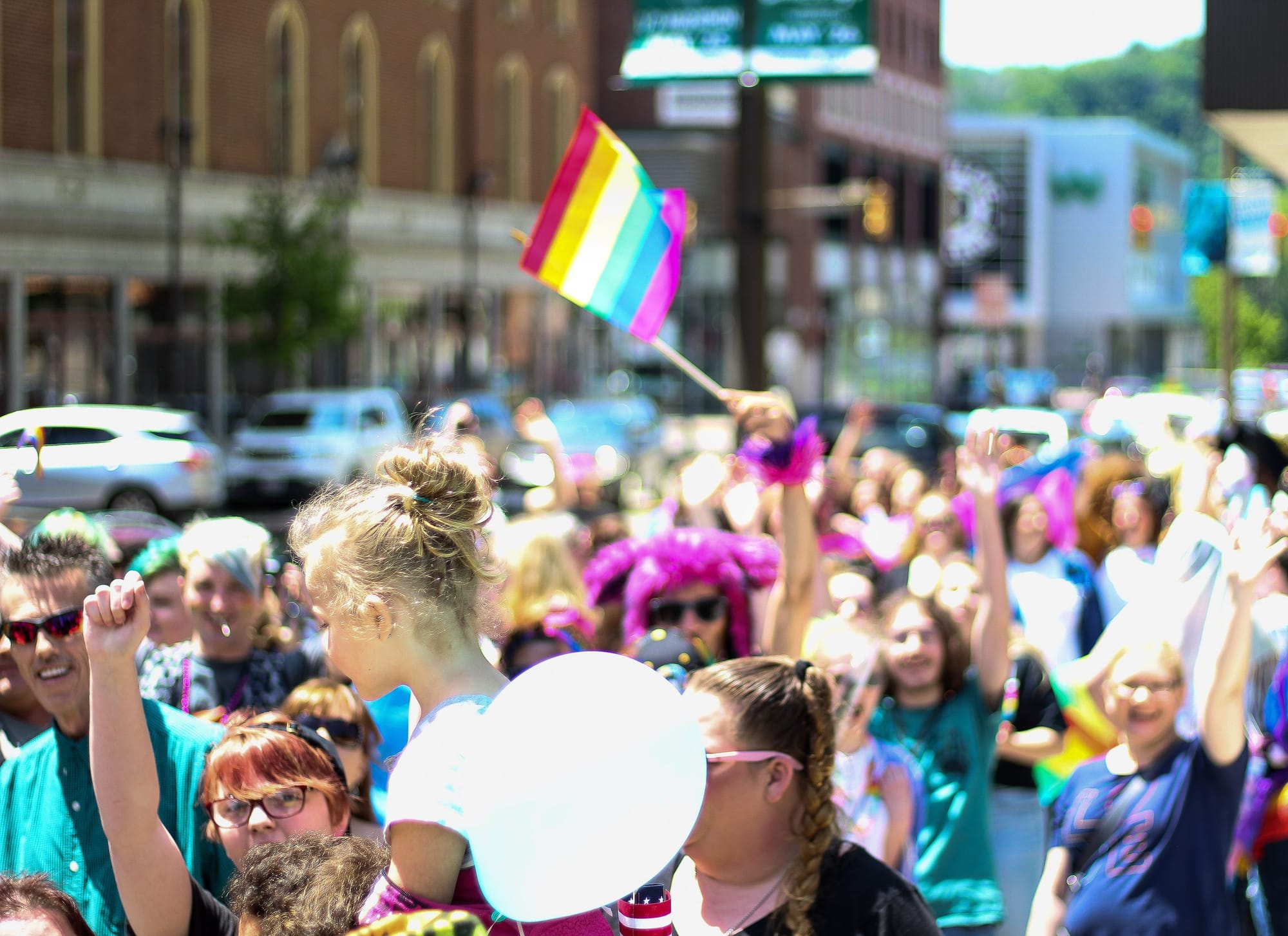
More than 10,000 of them, from 80 countries, are running, swimming and dancing across the city this week: the Gay Games are in Valencia until 4 July. This is no accident of the calendar, it is a symbol. In 2026, Spain became the top-ranked country in Europe for LGBTQIA+ rights, and Valencia is establishing itself as one of its most welcoming capitals. For many newcomers from English-speaking countries, the legal protections here go further than those they left behind. This is our survey of a city that reassures, without turning a blind eye to what worries.
The number-one country in Europe
On 12 May 2026, ILGA-Europe published its annual Rainbow Map: Spain takes first place on the continent with 88.7%, ahead of Malta and Iceland. It is a spectacular climb, the country having ranked only fifth a year earlier. The reasons: the concrete rollout of the 2023 laws, the creation of an independent equal-treatment authority and the full depathologisation of trans healthcare pathways.
The law follows opinion: according to the Ipsos Pride 2025 survey, 86% of Spaniards support same-sex marriage, and the country ranks first in the world for accepting visible LGBTQIA+ life in everyday settings. In concrete terms, in Valencia, two men holding hands on the plaza de la Reina turn no heads.
Valencia, city of Orgull
Here the Pride march is called the Orgull, and it is Lambda that organises it. The Valencian LGTB+ collective turns 40 this year: founded on 25 September 1986, it has become the backbone of the community, with its psychological, legal and social support services, its youth, trans, family and senior groups, and its programme supporting victims of hate crime (its headquarters are at avenue Primer de Maig, 55).
In 2026, the march was brought forward to 20 June, under the slogan "Pels teus drets, actua" (For your rights, act), to make room for the Gay Games. Every year, tens of thousands of people come down from the Alameda towards the plaza del Ayuntamiento, in an atmosphere closer to a village fiesta than a militant parade. A parallel march, the Orgullo Crític, sets off from Russafa to remind everyone that not everything has been won.
Russafa, the epicentre
If you are looking for the neighbourhood where the community lives out in the open, it is Russafa. Bars, cafés, queer shops, Sunday-night drag shows: this former working-class district south of the centre has taken over from El Carmen, the historic epicentre of the 1980s to 2000s. We come back to it in our guide to the cultural scene, but here is the essential point: in Valencia there is no "ghetto", rather neighbourhoods where visibility is total and a rest of the city where it simply poses no problem.
The uncomfortable figures
Not everything is rosy, though. In 2024, the Interior Ministry recorded 528 offences linked to sexual orientation or gender identity in Spain, the second most common motive for hate crime behind racism. Online hate speech against LGBTQIA+ people jumped 22% in a year. And the Comunitat Valenciana sits slightly above the national average in hate-crime rates per capita.
Above all, the dark figure is massive: the federation FELGTBI+ estimates that fewer than 1% of the assaults reported by those affected end up in official statistics. The associations say it again and again: filing a complaint, every time, is the only way to make the phenomenon visible.
A political context under strain
Since 2023, the Generalitat Valenciana has been governed by the Partido Popular with the parliamentary support of Vox. The pioneering Valencian laws of 2017 (trans rights) and 2018 (LGTBI equality) have not been repealed, but a May 2025 law amended some sensitive articles, notably on support for trans minors. The Ombudsman and the central government have taken the matter to the Constitutional Court; the appeals are pending as we write. The regional parliament's LGTBI committee was also abolished at the end of 2025, and associations denounce the weakening of the public Orienta support network.
This is the Valencian paradox: a society among the most welcoming in Europe, regional institutions rowing against the current, and a community sector, Lambda first among them, more mobilised than ever. The Observatorio Valenciano contra la LGTBIfobia (966 445 621) logs incidents and publishes reports to document the reality on the ground.
The bottom line
Valencia remains one of the most relaxed big cities in Europe in which to live your orientation or gender identity openly. The legal protections are solid, daily life is easy, the scene is alive. The points to watch are real but identified: online hate speech, and a regional political climate to keep an eye on. In our three companion pieces, we guide you through the cultural scene, health and your concrete rights.
Sources
- ILGA-Europe - Rainbow Map 2026 (rainbow-europe.org).
- Ipsos - LGBT+ Pride 2025 global survey.
- Ministerio del Interior - hate-crime statistics 2024; FELGTBI+.
- Lambda València; Observatorio Valenciano contra la LGTBIfobia.
Information verified in July 2026. The Daily Valencia is an AI-assisted publication with human review. Figures and the political context evolve; consult official sources for the latest position.
Le Livre blanc de l'expat à Valencia
NIE, empadronamiento, fiscalité, école, logement : tout l'essentiel pour s'installer, réuni dans un guide PDF. Laisse ton e-mail, on te l'envoie.
🎉 Et voilà ! Ton Livre blanc de l'expat s'ouvre ici :
Ouvrir le Livre blancDernière étape pour rejoindre l'aventure : confirme ton inscription dans l'e-mail qu'on vient de t'envoyer.