
What is the best ham and cured meat on the Costa Blanca?
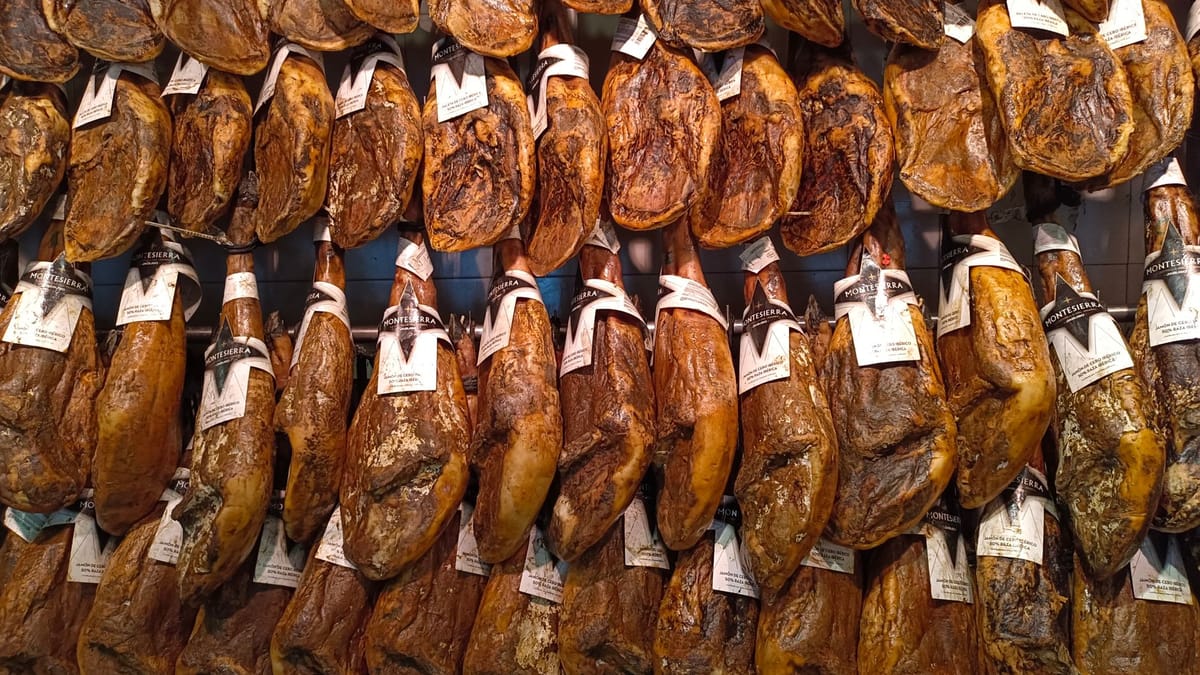
A surprise for many newcomers: the most remarkable cured meat on the Costa Blanca is not a ham at all, it is sobrasada de Tarbena, a spreadable pork sausage widely assumed to be purely Majorcan yet with a genuine Alicante history behind it. Beyond that, the province has neither a dehesa (oak forest) nor a ham designation of its own, but it does have its own sausages (longaniza de Pinoso, guarra de Villena) and some solid addresses in Alicante, Denia and Benidorm. Here is a short, local tour so you know what you are buying.
What makes a good ham, the basics worth knowing?
Before the local angle, a word on the national basics, because they apply everywhere in Spain, Costa Blanca included. Everything starts with the breed of pig. The dark-coated cerdo iberico (hence the nickname "pata negra") has the genetic trait of marbling fat through the muscle: that melting marbling is what drives the price of jamon iberico. White pigs, by contrast, produce jamon serrano, simpler and more affordable.
The top tier comes from the montanera, the autumn-and-winter period when Iberian pigs are turned loose in the dehesa (holm-oak forest) to gorge on acorns. A geographical honesty check: those dehesas are in Extremadura, Andalusia and around Salamanca. There are none in Alicante province. So the exceptional ham you eat here has travelled; it does not grow on the spot.
| Seal colour (precinto) | What it means |
|---|---|
| Black | Bellota 100% iberico, acorn-fed. The top tier. The only one allowed to say "pata negra" since 2014. |
| Red | Bellota crossbred iberico (50 to 75% Iberian), also acorn-fed. Excellent value for money. |
| Green | Cebo de campo: free range, but with supplemented feed. A good everyday ham. |
| White | Cebo: intensive rearing, grain-fed. The entry-level Iberian. |
This colour-coded seal system dates from the 2014 reform (Real Decreto 4/2014). On designations, Spain has four DOPs for Iberian ham (Jabugo, Guijuelo, Los Pedroches, Dehesa de Extremadura) and, for serrano, DOP Teruel and IGP Trevelez. Once again, none sit in Alicante province: do not go looking for a "Costa Blanca designation", it does not exist. Serrano ham, for its part, is read by its ageing: Bodega (the basic tier), Reserva, then Gran Reserva (the most matured).
What are the genuinely local cured meats of the Costa Blanca?
This is where the province gets interesting. Forget ham for a moment: the real local gems are embutidos (cured sausages).
Sobrasada de Tarbena. Tarbena, a small village in the Marina Baixa, was resettled after the expulsion of the Moriscos by settlers from Majorca. They brought two things with them: their Catalan speech and their sobrasada, that spreadable pork paste seasoned with pimenton. The tradition is still alive, tied to the matanza (the autumn-winter pig slaughter). The result is a sobrasada widely assumed to be purely Majorcan but which has its own Alicante variant, with a migration story behind it (sources: Wikipedia "Tarbena", the Vinedos Fullana blog, 3 July 2025). Set against Sobrassada de Mallorca (protected by an IGP), Tarbena's version leans on local terroir and memory instead.
Longaniza de Pinoso. Head inland to the Medio Vinalopo. Longaniza de Pinoso comes in two versions: blanca, fresh and grilled straight away, and seca, left to dry. The producer Embutidos Espinosa, in Pinoso, has received the Comunitat Valenciana's quality label for its dried longaniza (sources: La Despensa de Alicante, Intercomarcal).
Longaniza and guarra. These spiced sausages are specialities shared between Villena and Pinoso, two Vinalopo towns known for their cured meats (source: Wikipedia "Gastronomia de la provincia de Alicante").
Worth a cautious mention, since the source stays generic: morcilla (blood sausage) also features in some slow-cooked Alicante dishes such as olleta or the local cocido (source: Wikipedia). We flag it without making a big deal of it.
| Speciality | Area | In brief |
|---|---|---|
| Sobrasada de Tarbena | Marina Baixa | Spreadable paste with pimenton, Majorcan heritage, matanza tradition |
| Longaniza de Pinoso | Medio Vinalopo | Blanca (grilled) and seca (dried) versions, Comunitat Valenciana quality label |
| Longaniza and guarra | Villena / Pinoso | Spiced sausages from the inland towns |
Where can you buy and taste good ham on the Costa Blanca?
Good news: even without a local dehesa, the province has genuinely serious houses for buying and tasting.
In Alicante city. La Pequena Jamoneria, C/ Pintor Cabrera no. 9 (03003), is a jamoneria specialising in iberico ham (both cebo and bellota), with slicing, vacuum-packing and delivery. Ideal for a gift or a fine piece to take home.
The Mercado Central in Alicante remains the best place to compare and taste before buying. Three stalls are worth the detour: Ibericos Victor (stall 23), which sells hams from producer Juan Manuel Hernandez, awarded "Alimentos de Espana Mejor Jamon 2020"; Charcuteria D'Ivorra / Antonio Ivorra (stalls 100-101 and 106), a fourth-generation family business; and Roman y Dori (stall 94). Take the time to chat, market sellers are often the best teachers (sources: Mercados Municipales de Alicante, Almanaque Gastronomico).
In Benidorm. Jamoneria Pig Ibericos Gourmet, in the old town, is a ham address worth knowing. One honest caveat: the exact address varies between sources (Doctor Perez Llorca 25 or Calle Invierno 9). Check before you go, as it may have changed.
In Denia. To sit down and taste, Taberna Toma Jamon is a tapas bar well regarded for its ham (source: Tripadvisor). Perfect after a stroll through the old town and before heading off to sample the Michelin-starred dining of the Costa Blanca, of which Denia is one capital.
And Torrevieja? Honestly, our research turned up nothing reliable in the way of a reference jamoneria or cured-meat shop in that town. We would rather tell you that than send you to a made-up address. A good slice of ham is also part of the Costa Blanca almuerzo, that mid-morning snack where grilled longaniza has its rightful place.
Frequently asked questions about ham and cured meats on the Costa Blanca
Is there a ham designation specific to Alicante province?
No. The four DOPs for Iberian ham (Jabugo, Guijuelo, Los Pedroches, Dehesa de Extremadura) and the serrano designations (DOP Teruel, IGP Trevelez) all sit elsewhere in Spain. The Costa Blanca has no dehesa and no ham designation of its own. Its specialities are embutidos, not hams.
What exactly is sobrasada de Tarbena?
A spreadable pork paste seasoned with pimenton, an Alicante cousin of Majorcan sobrasada. Tarbena having been resettled by Majorcan colonists after the expulsion of the Moriscos, the recipe followed and took root in the Marina Baixa, where it remains tied to the autumn-winter matanza.
How do you spot a genuinely good ham at the market?
Check the coloured precinto (seal): black for 100% bellota iberico, red for a crossbred bellota, green and white for the lower tiers. Be wary of the word "iberico" used alone and of prices that seem too low: a real bellota ham at a bargain price does not exist.
Where can you taste before buying on the Costa Blanca?
At the Mercado Central in Alicante, stalls such as Ibericos Victor or Charcuteria D'Ivorra will happily let you taste. It is the best way to compare without making a mistake.
Sources: Wikipedia "Tarbena" and "Gastronomia de la provincia de Alicante"; the Vinedos Fullana blog (3 July 2025); La Despensa de Alicante; Intercomarcal; the official website of La Pequena Jamoneria; Mercados Municipales de Alicante; Almanaque Gastronomico; Tripadvisor (Taberna Toma Jamon); Real Decreto 4/2014 for the seal system.
Information verified in August 2026. The Daily Costa Blanca is an AI-assisted publication with human review.
Le Livre blanc 2026 de l'expat
NIE, empadronamiento, fiscalité, école, logement : tout l'essentiel pour s'installer, réuni dans un guide PDF. Laisse ton e-mail, on te l'envoie.
🎉 Et voilà ! Ton Livre blanc 2026 de l'expat s'ouvre ici :
Ouvrir le Livre blanc 2026Dernière étape pour rejoindre l'aventure : confirme ton inscription dans l'e-mail qu'on vient de t'envoyer.
Réagis à cet article