
Violence against women and children: Spain's pioneering law and real resources
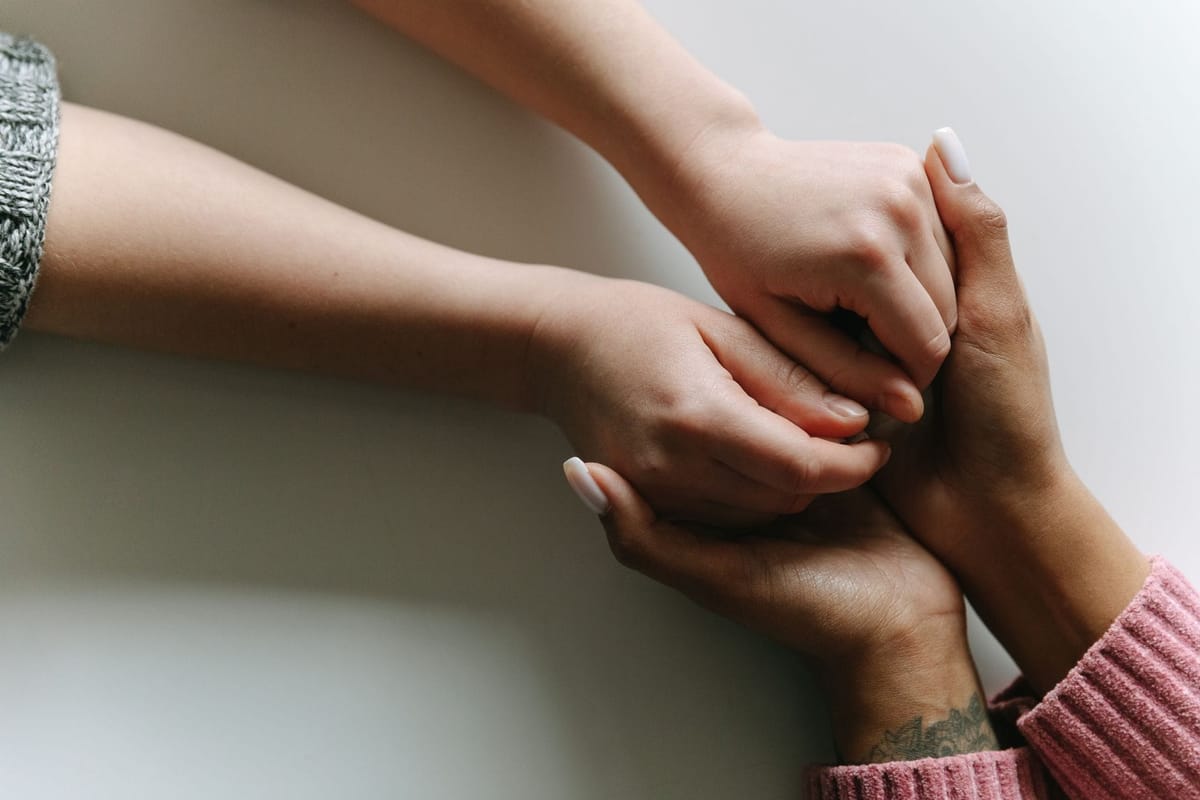
When you settle in Spain, you discover a country that, on violence against women and children, has built one of the most complete frameworks in Europe: a pioneering law, specialised courts, a multi-year state budget, and a dedicated child-protection law that has served as a model. Here is what you need to know, and above all who to turn to if you ever need help. If you are affected, 016 answers 24 hours a day, free of charge and in dozens of languages including English (full details at the end of the article).
A pioneering law against gender violence
As early as 2004, Spain adopted Organic Law 1/2004 on integral protection against gender violence, regarded as a first in Europe. Its approach is comprehensive: prevent, protect and repair, prosecute.
Its hallmark is the specialised courts, the Juzgados de Violencia sobre la Mujer. There are today more than 500 specialised judicial bodies (106 with exclusive jurisdiction and 355 with shared jurisdiction), with on-call services in the major cities, Alicante and Elche included. In practice, these cases are not diluted in a general court: they are handled by dedicated judges.
The law goes further than in many countries by treating certain offences committed within a couple as aggravated, and it relies on VioGén, a police risk-assessment system that tailors the protection of each victim, right up to electronic devices to monitor the aggressor.
Resources to match
Since 2017, a State Pact (Pacto de Estado) has brought together the political parties, the regions and the institutions around a common plan. Renewed in early 2025, it grew from 290 to 461 measures, now covers economic, vicarious (through the children) and digital violence, and comes with funding of 1.5 billion euros over five years. For 2026 alone, close to 180 million euros have been distributed among the autonomous communities. This is a multi-year financial commitment that few countries formalise so clearly.
How Spain compares
Spain created its specialised courts back in 2004, years ahead of equivalent arrangements elsewhere, and institutionalised risk assessment and victim follow-up very early. Some tools that other countries later developed, such as electronic proximity-alert bracelets, drew in part on the Spanish model. Put simply: on this subject, Spain is often seen as a European benchmark, with an older architecture and a state budget set out over the long term. For newcomers, that means arriving in a system where these issues are taken seriously by an established, well-resourced chain of protection.
Children: the LOPIVI law
For children, Spain adopted the LOPIVI law in 2021 (Organic Law 8/2021 on the integral protection of children and adolescents against violence), also a pioneer in Europe. The notable innovations:
- A wellbeing and protection coordinator is mandatory in every school, public and private. This is a trusted point of contact who detects and reports situations of risk.
- The duty to report: anyone who becomes aware of a situation of violence against a minor must report it, and professionals working with children are held to this particularly strongly.
- The limitation period for serious offences only begins to run once the victim turns 35, recognising that trauma can take years to be spoken about.
- The first specialised court for violence against children opened in Las Palmas in 2022.
Another useful point if you work or volunteer with children: you must present a certificate confirming the absence of any conviction for sexual offences.
What this means for you, living here
Day to day, this means these situations are taken seriously by a dedicated chain: police, courts and social services. If you are a witness or a victim, you can file a complaint, request a protection order, and be directed towards legal, psychological and social support. At school, your child has an identified point of contact. And you do not need to speak perfect Spanish to ask for help: the lines below operate in many languages, including English.
These resources are available to everyone in Spain, regardless of nationality or immigration status. You do not need to be a Spanish citizen, an EU citizen, or a legal resident to call the helplines, contact the police, or ask for protection and support. Seeking help does not depend on your paperwork.
Where to find help
In case of immediate danger, call 112 (the free Europe-wide emergency number, which operates in several languages).
- 016: violence against women. Free, 24 hours a day, in around 50 languages including English, and the call leaves no trace on your phone bill. Also by WhatsApp on 600 000 016 and by email at 016-online@igualdad.gob.es. Urgent calls can be redirected to 112.
- ANAR, help for children and adolescents: 900 20 20 10 (or 116 111). There is also a dedicated line for adults who want to help a minor: 600 50 51 52.
You can contact these services even for a simple doubt, or to help someone close to you.
Sources
- BOE: Organic Law 1/2004 against gender violence
- Government Delegation: State Pact against gender violence
- The 016 service (phone, WhatsApp, email)
- BOE: Organic Law 8/2021 (LOPIVI) on child protection
- ANAR Foundation: help for children and adolescents
Information verified in July 2026. This is an informative article and does not replace legal advice. If you or someone close to you is affected, the resources above are there for exactly that, including for a simple doubt. The Daily Costa Blanca is an AI-assisted publication with human review. Spotted a mistake? Write to hello@thedailycostablanca.com or visit thedailycostablanca.com.
Le Livre blanc 2026 de l'expat
NIE, empadronamiento, fiscalité, école, logement : tout l'essentiel pour s'installer, réuni dans un guide PDF. Laisse ton e-mail, on te l'envoie.
🎉 Et voilà ! Ton Livre blanc 2026 de l'expat s'ouvre ici :
Ouvrir le Livre blanc 2026Dernière étape pour rejoindre l'aventure : confirme ton inscription dans l'e-mail qu'on vient de t'envoyer.
Réagis à cet article