
What does the Costa Blanca's economy look like for entrepreneurs?
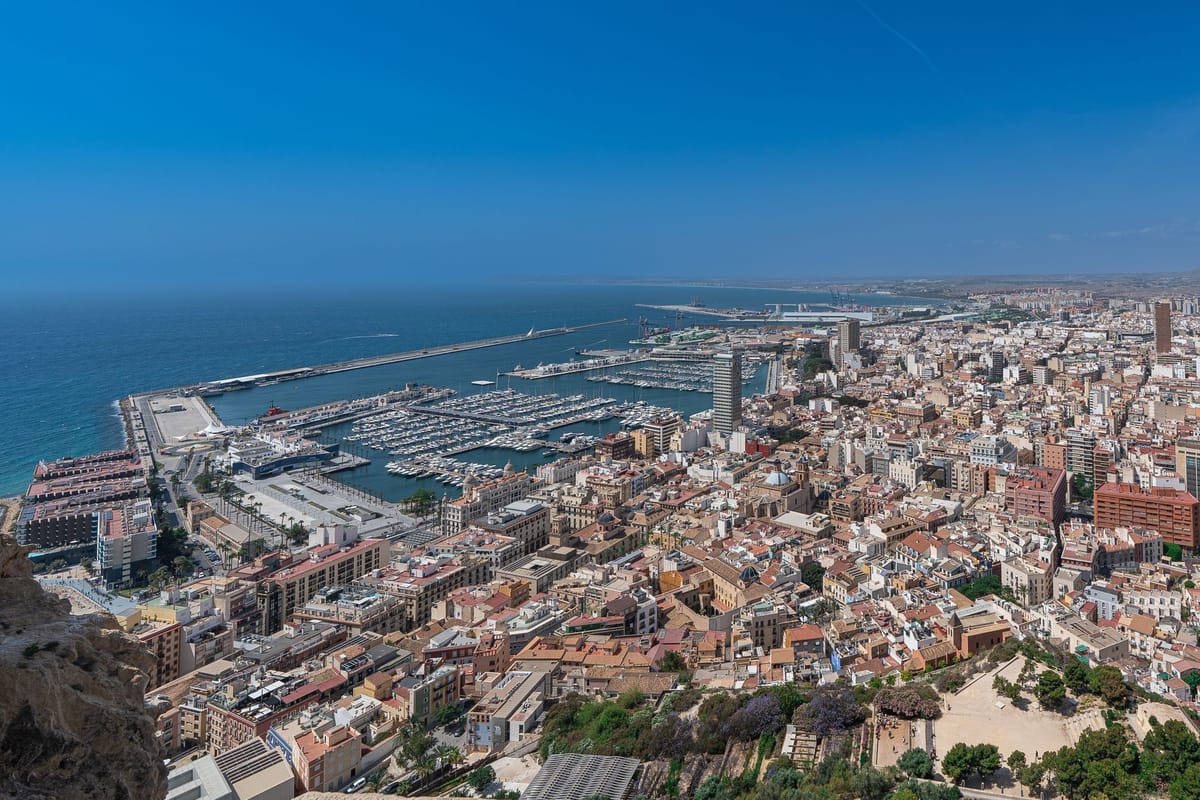
People come to the Costa Blanca for the sun and the sea; increasingly, they stay to work, invest and build a business there. Behind the postcard lies a dynamic, internationally minded economy, driven by tourism, construction and a growing tech scene. For the entrepreneur or investor settling in, Alicante province offers a rare combination: quality of life, manageable costs and a genuine market. Here is the overview.
The Costa Blanca's economic fabric
The figures tell most of the story. Alicante province closed 2025 with solid growth, with GDP up around 3 percent year on year, driven by exports, international tourism and financial activity. Tourism broke every record: 8.5 million foreign visitors, 84 million overnight stays and nearly 11.5 billion euros in spending. Construction became the most dynamic sector (around plus 8 percent), driven by foreign residential demand. By the end of 2025, the province counted more than 769,000 people registered with social security, and foreign workers, close to 20 percent of the total, accounted for more than half of the jobs created.
The flip side: traditional industry (footwear and textiles in Elche, toys in the Foia de Castalla) is under pressure and in decline. Hence the shift towards higher value-added activities: technology, advanced services, health, premium real estate. Geographically, each area has its own speciality: Alicante, the capital of services and tech (it alone accounts for around a quarter of the province's GDP); Elche, the industrial and logistics hub; Benidorm and the Marina Baixa, the tourism engine; Denia, Xabia and the Marina Alta, home to upmarket services for a well-off resident clientele.
| Sector | Weight and momentum (2025-2026) |
|---|---|
| Tourism | 2025 record: 8.5 million foreign visitors, 11.5 billion euros in spending |
| Construction and real estate | The most dynamic sector, around plus 8 percent |
| Employment | More than 769,000 registered, up 2.7% a year, close to 20% foreign workers |
| Tech and advanced services | Distrito Digital in Alicante: AI, big data, blockchain, quantum computing |
| Traditional industry | Elche's footwear and textile sector under pressure |
A startup ecosystem under construction
The big new development of the decade is Distrito Digital, the Comunitat Valenciana's technology hub, based in Alicante at the Agua Amarga seafront complex. Several premises there host tech firms and startups working on artificial intelligence, big data, blockchain, IoT and quantum computing, with coworking spaces, auditoriums and a calendar of events and training. The network is spreading: innovation hubs are opening in Benidorm (tourism), Gandia (health) and Orihuela (agrotech), and public coworking spaces such as the Espai Coworking in Benidorm host freelancers and young startups.
The ecosystem remains younger than Valencia's, home to the Lanzadera accelerator (founded by Juan Roig), but the links and the proximity are real. For a founder, the Costa Blanca combines a low cost of setting up, a pool of multilingual talent and a quality of life that helps with recruiting: more and more remote workers and digital nomads are choosing Alicante as their base.
A deeply international economy
The Costa Blanca is one of the most cosmopolitan areas of Spain, and its foreign communities are economic players in their own right:
- United Kingdom: historically the largest expat community, heavily present in real estate, legal services, hospitality and wealth management. Brexit reshuffled the deck: the share of British buyers has shrunk, but the resident community remains large and entrepreneurial.
- The Netherlands and northern Europe: the Marina Baixa and Marina Alta (Alfaz del Pi, Altea, Moraira, Xabia) host one of the strongest northern European presences in Spain, Dutch, Norwegian and Belgian residents leading the way, with international schools, services and real estate to match.
- Germany: a well-established community and businesses, acting as a relay for import-export and services, backed by chambers of commerce and a network of German-speaking professionals.
- France: a fast-growing community, active in hospitality, real estate, consulting and digital services.
The property market illustrates this maturity: after decades of relying almost solely on British buyers, it has diversified towards German, Dutch, French, Belgian, Scandinavian and American buyers. Less volume, but a more selective, often wealthier buyer.
Starting a business on the Costa Blanca
Setting up here is straightforward, provided you choose the right structure. There are two main routes: the autonomo (sole trader, quick to set up, ideal for starting out alone, see our guide to becoming autonomo) and the Sociedad Limitada (SL), the equivalent of a limited company, worth choosing as soon as there are partners, investors or a liability concern. On tax, the impatriate regime, the well-known Beckham law, can meaningfully reduce the bill in the first years for eligible profiles.
One point worth clarifying, since confusion is common: the ZEC (the Canary Islands' special zone) and its very low corporate tax rate apply only to the Canary Islands, not to the Costa Blanca. Here, standard Spanish corporate tax rules apply. The local advantage lies elsewhere: a cost of living and operating clearly below Paris, London or Amsterdam (rents, salaries, office space), which improves margins accordingly. We cover this in detail in our guide to the cost of living on the Costa Blanca. For networking, lean on international entrepreneur associations, chambers of commerce and Distrito Digital events.
Luxury real estate, the quiet engine
Behind tourism, premium real estate is one of the genuine engines of the coastal economy. The high-end market, villas over a million euros and seafront flats, attracts international developers, renowned architects and wealthy buyers from around the world. Denia, Xabia, Moraira, Altea, Benissa and Orihuela Costa concentrate this segment, with contemporary architecture projects that have changed the face of the coast. Beyond the sale itself, this market feeds a whole local economy: construction, design, services, maintenance, rental management, and a swarm of skilled trades.
Upmarket tourism, the region's showcase
The Costa Blanca is no longer just about volume: it is moving upmarket. The area lines up first-rate addresses, from the SHA Wellness Clinic (Alfaz del Pi), a global wellness reference, to the five-star hotels of Benidorm and Alicante, alongside high-flying dining led by Michelin-starred chefs such as Quique Dacosta in Denia. Add golf resorts, yacht charter and a fast-growing premium services offer, and you get a destination that appeals to a demanding international clientele, the same clientele that often ends up settling here for good. We cover golf in a dedicated guide.
Outlook and opportunities
Where are the growth drivers? Several niches stand out: services for wealthy foreign residents (private healthcare, wealth and tax advice, concierge services, property management), proptech and healthtech, upmarket tourism and wellness, and the whole ecosystem of remote work and digital nomadism, which the Spanish digital nomad visa has made very accessible to non-EU profiles. Local authorities, through Distrito Digital and economic promotion agencies, are multiplying schemes to welcome foreign businesses and talent. The message is clear: the Costa Blanca no longer wants to be just a holiday destination, but a place where things get built.
Sources
- INECA: Institute of Economic Studies for Alicante province
- Alicante Chamber of Commerce: economic news
- Distrito Digital Comunitat Valenciana
- Alicante Plaza: local economic press
Information verified in August 2026. Economic data and schemes evolve: for any investment or business-creation decision, check official sources and a professional adviser. The Daily Costa Blanca is an AI-assisted publication with human review.
Frequently asked questions
Which sectors are thriving on the Costa Blanca?
Tourism (a record year for spending in 2025), construction and premium real estate, services for foreign residents, and a rising tech scene around Alicante's Distrito Digital (AI, big data, blockchain). Elche's traditional industry, on the other hand, is under pressure.
Is it better to start as an autonomo or set up an SL?
The autonomo route is simpler for starting out alone; the Sociedad Limitada (SL) becomes worthwhile as soon as there are partners, investors or a need to limit liability. A tax adviser can help you choose based on your project.
Does the Canary Islands' reduced tax zone (ZEC) apply in Alicante?
No. The special Canary Islands zone only covers the Canary Islands. On the Costa Blanca, standard Spanish corporate tax rules apply; the local advantage lies mainly in operating costs well below those of Paris, London or Amsterdam.
Is the Costa Blanca well suited to digital nomads?
Yes: a moderate cost of living, climate, connectivity, coworking spaces and a Spanish digital nomad visa accessible to non-EU profiles. Alicante is establishing itself as an increasingly popular base for remote workers.
Le Livre blanc 2026 de l'expat
NIE, empadronamiento, fiscalité, école, logement : tout l'essentiel pour s'installer, réuni dans un guide PDF. Laisse ton e-mail, on te l'envoie.
🎉 Et voilà ! Ton Livre blanc 2026 de l'expat s'ouvre ici :
Ouvrir le Livre blanc 2026Dernière étape pour rejoindre l'aventure : confirme ton inscription dans l'e-mail qu'on vient de t'envoyer.
Réagis à cet article