
Alicante's farmland: the Palmeral of Elche, Vega Baja and water
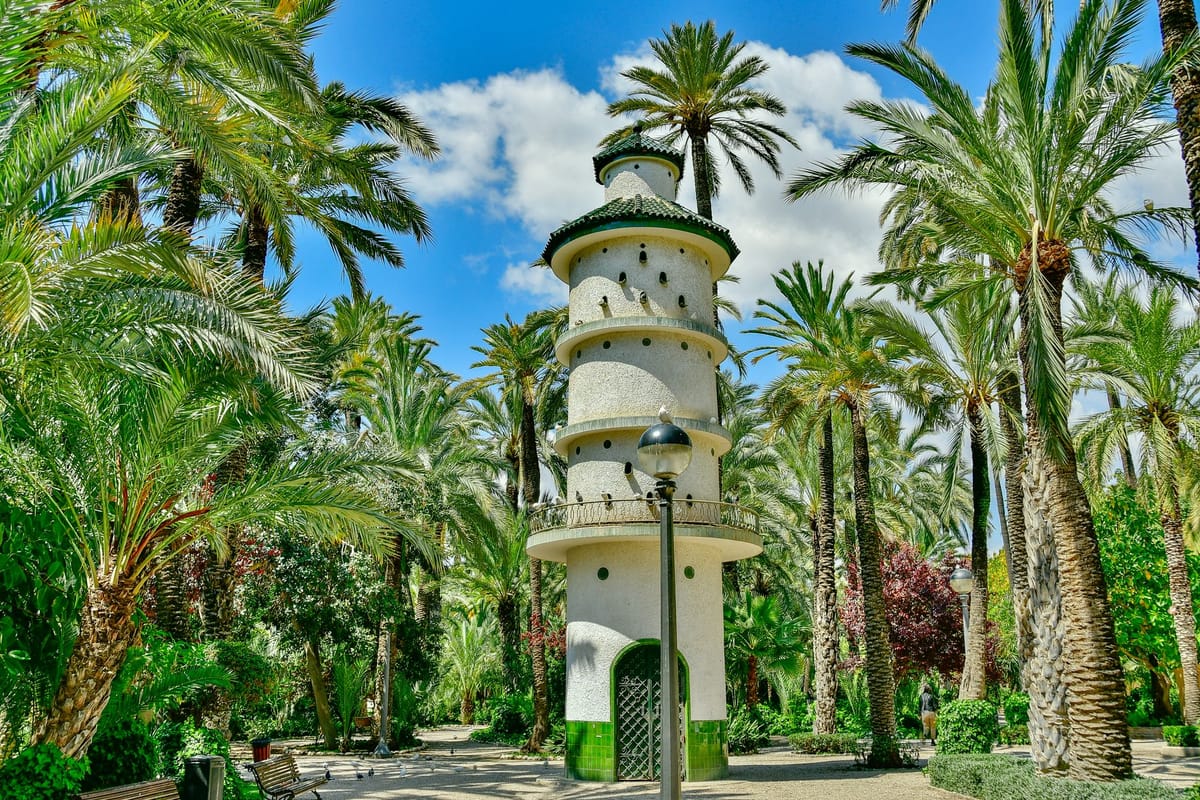
The huerta of Valencia, as such, does not exist in the province of Alicante: here the irrigated farming landscape goes by other names, the Huerta de Alicante, the Vega Baja del Segura and, above all, the Palmeral of Elche, the largest palm grove in Europe and a UNESCO World Heritage Site since 2000. You can live among these lands, but the protected palm grove and rural soil come with strict building rules.
What are the key facts about Alicante's farmland?
The Palmeral of Elche holds around 200,000 date palms, making it the largest palm grove in Europe, and it has been a UNESCO World Heritage Site since 30 November 2000, according to UNESCO and Elche town hall. Its irrigation system, of Arab origin, was laid out around the 10th century. In the Vega Baja del Segura, historic irrigation relies on azudes (weirs), acequias (supply channels) and azarbes (drainage channels), a network greatly extended in the 18th century by Cardinal Belluga's drainage works, according to the journal Investigaciones Geográficas. Water justice there is delivered by the Juzgado Privativo de Aguas de Orihuela, founded in 1275 and recognised as a customary and traditional court by Organic Law 10/2021, per the official gazette (BOE). The Huerta de Alicante, meanwhile, has been irrigated since the 16th century by the Tibi dam, the oldest still-working dam in Europe. The DANA storm of September 2019 was the costliest natural disaster in recent Spanish history, with about 1.319 billion euros in damage, according to El Español.
| Marker | Figure | Source |
|---|---|---|
| Palms in the Palmeral of Elche | About 200,000, largest palm grove in Europe | UNESCO / Elche town hall |
| UNESCO listing of the Palmeral | World Heritage since 30 November 2000 | UNESCO |
| Orihuela Water Court | Founded 1275, customary court recognised in 2021 | BOE (Organic Law 10/2021) |
| Tibi dam (Huerta de Alicante) | Completed 1594, oldest working dam in Europe | Wikipedia / Tibi town hall |
| September 2019 DANA (Vega Baja) | About 1.319 billion euros in damage | El Español |
What exactly is the farming landscape of Alicante province?
Unlike Valencia, Alicante does not have one great huerta but several distinct irrigated districts. North of the capital, the Huerta de Alicante (Camp d'Alacant) is a farming plain long dependent on scarce rainfall, made cultivable by the Tibi dam and a network of acequias across the Alacantí. Further south, the Vega Baja del Segura is a broad alluvial plain of the Segura river, long marshy, turned into a chequerboard of vegetable and citrus plots through centuries of drainage. To taste what these lands yield, see our day-trip ideas around the region.
At the heart of this system sits a landscape unique in Europe: the Palmeral of Elche, an Arab-origin date-palm grove that wraps around the city for about two kilometres long and one kilometre wide, according to UNESCO. The Vega Baja is also a land of intensive production: artichoke from the Vega Baja del Segura alone covers about 2,100 hectares, according to Guía Repsol.
Why is the Palmeral of Elche a World Heritage Site?
Because it is a unique example in Europe of Arab farming and irrigation, transplanted from North Africa and kept alive for more than a thousand years. The Palmeral of Elche was inscribed on UNESCO's World Heritage list on 30 November 2000, with around 200,000 date palms and a traditional irrigation system still in use, according to UNESCO and Elche town hall.
The landscape is organised into huertos (orchards) separated by channels, the most famous being the Huerto del Cura , listed as a National Artistic Garden. The UNESCO listing stresses the protection of the orchards' structures, irrigation systems and traditional dwellings.
How is water managed, and is there an Alicante version of the Water Tribunal?
Yes. The Vega Baja del Segura has its own water court: the Juzgado Privativo de Aguas de Orihuela, which governs the distribution of Segura water and its acequias. Founded in 1275 under Alfonso X the Wise, it holds the oldest known document appointing a water judge, according to Wikipedia and the institution itself. In 2025 it marked its 750th anniversary.
Organic Law 10/2021 of 14 December 2021 recognised the Juzgado Privativo de Aguas de Orihuela , along with the Tribunal del Comuner del Rollet de Gràcia in Aldaia, as a customary and traditional court, according to the BOE. Like the Valencia Water Tribunal, it is seeking UNESCO recognition.
Further north, the Huerta de Alicante has depended for centuries on the Tibi dam, a barrier ordered by Philip II and completed in 1594, 46 metres high, considered the oldest modern dam still in service in Europe, according to Tibi town hall and Wikipedia. Water there was historically scarce and precious, so much so that it was auctioned among irrigators.
The Tibi dam still feeds a network of acequias across the Alacantí, completed by weirs and bridges over the main channel.
What legal protection does the Palmeral have, and what does the law say about building?
The Palmeral of Elche is protected by a specific law: law 1/1986 of 9 May, which governs the guardianship of the Palmeral, replaced and reinforced by law 6/2021 of 12 November on the protection and promotion of the Palmeral of Elche, according to the BOE. These texts aim to guarantee the historical continuity of the grove's natural and cultural values by regulating its use, purpose and exploitation.
In practice, the law in no case allows the enlargement of buildings or installations in protected areas, but does allow the restoration, rehabilitation and reconstruction of existing structures, in line with heritage and planning rules, according to the text of the law. It draws, for the first time, a distinction between palm groves, groups of palms and scattered palms, and creates a Palmeral Board to apply it. Outside the grove, building on non-developable rural land depends on the Valencian land-use law and each town's own rules.
What was the impact of the September 2019 DANA on the Vega Baja?
The DANA of 11 to 14 September 2019 caused the worst flooding recorded in 140 years across the provinces of Alicante and Murcia, according to analyses cited by the press. In Orihuela, more than 500 litres per square metre fell, and the Segura river passed 6.40 metres on 13 September before overflowing, flooding towns such as Almoradí, Dolores, Daya Vieja, Daya Nueva and San Fulgencio, according to El Español and Investigaciones Geográficas.
Seven people died, and the economic cost made it the costliest natural disaster in recent Spanish history, at about 1.319 billion euros in damage, according to El Español. The Vega Baja's irrigation infrastructure was badly damaged, and rebuilding required works and upgrades running to several million euros. The episode reopened the debate over how to manage the plain and the Segura.
Can you live among these Alicante farmlands?
Yes, but the rules vary sharply by area. In the Palmeral zones protected by law, you cannot enlarge a building: you can only restore or rehabilitate what already exists, which heavily limits new projects. In the Vega Baja and the Huerta de Alicante, rural housing is old and dense, from fincas and manor houses to small market-garden plots, but any new build on non-developable land is still subject to Valencian land-use law and municipal rules.
In practice, settling in this countryside usually means buying or renting an existing, regularised property rather than building new. Before any purchase, check the exact status of the plot with the town hall and the Generalitat. To prepare a more conventional move on the coast, read our first 90 days guide.
| Marker | Figure | Source |
|---|---|---|
| Palmeral guardianship law | Law 1/1986, replaced by law 6/2021 | BOE |
| Enlargement in protected zones | Banned; only restoration allowed | BOE (Palmeral law) |
| Cardinal Belluga (Vega Baja) | 18th-century drainage and azarbe network | Investigaciones Geográficas |
| Vega Baja del Segura artichoke | About 2,100 hectares cultivated | Guía Repsol |
| Deaths in the 2019 DANA | 7 in the Vega Baja | El Español |
Frequently asked questions about Alicante's huertas
Is there a huerta like Valencia's in Alicante?
Not exactly. Alicante province does not have a single peri-urban huerta like Valencia, but several irrigated districts: the Huerta de Alicante around the capital, the Vega Baja del Segura to the south, and the Palmeral of Elche, a unique World Heritage palm grove.
How many palms does the Palmeral of Elche have?
Around 200,000 date palms, according to UNESCO and Elche town hall, making it the largest palm grove in Europe. It has been on UNESCO's World Heritage list since 30 November 2000.
Is the Orihuela Water Court like the Valencia Water Tribunal?
Yes, in spirit. It is a customary water court, founded in 1275, recognised by Organic Law 10/2021 as a customary and traditional court, and seeking, like Valencia's, UNESCO recognition.
Can you build in the Palmeral of Elche?
No enlargement in areas protected by the Palmeral law: only restoration, rehabilitation and reconstruction of existing buildings are allowed. Any project must be checked with Elche town hall and the Generalitat.
Sources (facts cross-checked and rewritten, never copied): UNESCO (World Heritage listing for the Palmeral of Elche), Elche town hall, VisitElche, BOE (law 1/1986, law 6/2021, Organic Law 10/2021), Juzgado Privativo de Aguas de Orihuela, Investigaciones Geográficas, Guía Repsol, Tibi town hall, El Español, consulted in July 2026. Key figures (number of palms, UNESCO listing date, cost of the 2019 DANA, law dates) were verified against these sources.
Information verified in July 2026. The Palmeral's status and rural planning rules evolve and depend on the municipality: check the exact status of any plot with the relevant town hall and the Generalitat Valenciana before buying or building. This article was prepared with the help of AI, then cross-checked, verified and edited by our newsroom, which takes editorial responsibility for it.
Le Livre blanc 2026 de l'expat
NIE, empadronamiento, fiscalité, école, logement : tout l'essentiel pour s'installer, réuni dans un guide PDF. Laisse ton e-mail, on te l'envoie.
🎉 Et voilà ! Ton Livre blanc 2026 de l'expat s'ouvre ici :
Ouvrir le Livre blanc 2026Dernière étape pour rejoindre l'aventure : confirme ton inscription dans l'e-mail qu'on vient de t'envoyer.
Réagis à cet article